
Give and take
Give and take
America’s 2025 National Security Strategy has provided geopolitical food-for-thought for a world in flux. Amit Agnihotri, assesses the key players and challenges
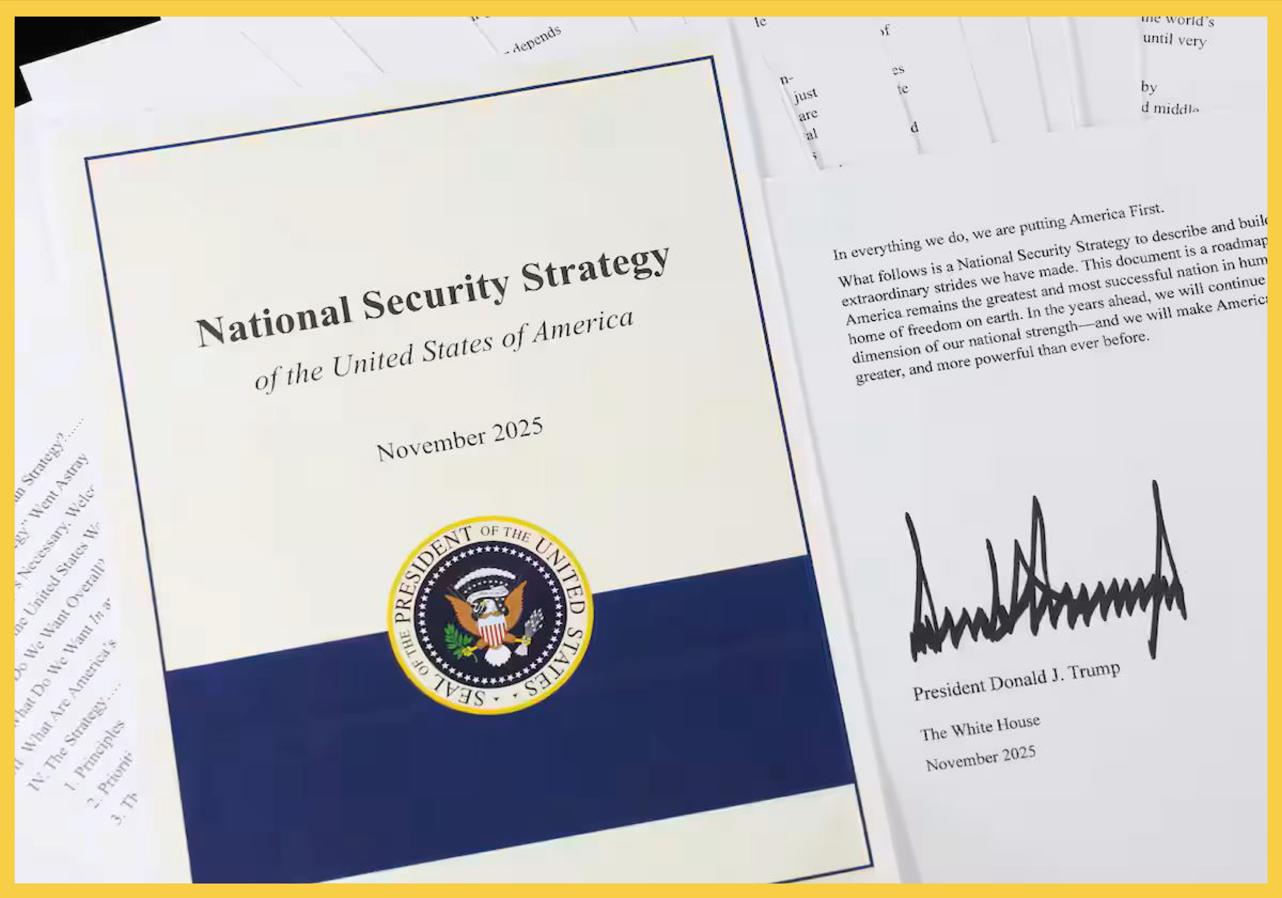
As we prepared to welcome 2026, the new US National Security Strategy (NSS), revealed by President Donald Trump in November 2025, created a flutter around the world, which was still trying to fathom the emerging new global order.
One major shift has been the weakening, over the past few years, of the United Nations-centric international system created by the US in 1945 at the end of World War II.That flux had generated hopes of a new international system but its contours were still hazy.
In this light, the new NSS looked like an extension of President Trump’s inward-looking policy approach, defined by his MAGA (Make America Great Again) slogan in early 2025. Yet some key pointers in the plan are path-breaking and could have far-reaching geopolitical implications.
The key points are Washington’s willingness to give up its desire for global dominance, gain pre-eminence in the Western Hemisphere and shift to managing or balancing power equations in a multi-polar world.
‘As the United States rejects the ill-fated concept of global domination for itself, we must prevent the global, and in some cases even regional, domination of others,’ the NSS document said, adding that ‘the days of the United States propping up the entire world order like Atlas are over’.
For a while, an economically strong China and a militarily aggressive Russia had been the two most prominent geopolitical challengers to US global hegemony. In the new NSS document, China emerged as the key strategic challenge to the US but Beijing was now to be countered through financial and technological rather than military means.
‘If America remains on a growth path – and can sustain that while maintaining a genuinely mutually advantageous economic relationship with Beijing – we should be headed from our present $30 trillion economy in 2025 to $40 trillion in the 2030s, putting our country in an enviable position to maintain our status as the world’s leading economy,’ the document noted.
Regarding Russia, whose growing ties with China had added to Washington’s woes, the US was now focused on re-establishing strategic stability with Moscow – a clear departure from its earlier stance.
The new Security Strategy was reflected in the aggression that led US forces to overthrow Venezuelan president Nicolas Maduro and take control of the oil-rich South American nation in a brazen display of a ‘might is right’ policy in international affairs.
Such US aggression in Venezuela further jolted a world that was still trying to come to terms with Russia’s invasion of Ukraine in February 2022, and the international community’s subsequent failure to end the ongoing conflict.
Beijing was nowto be countered through financial and technological rather than military means
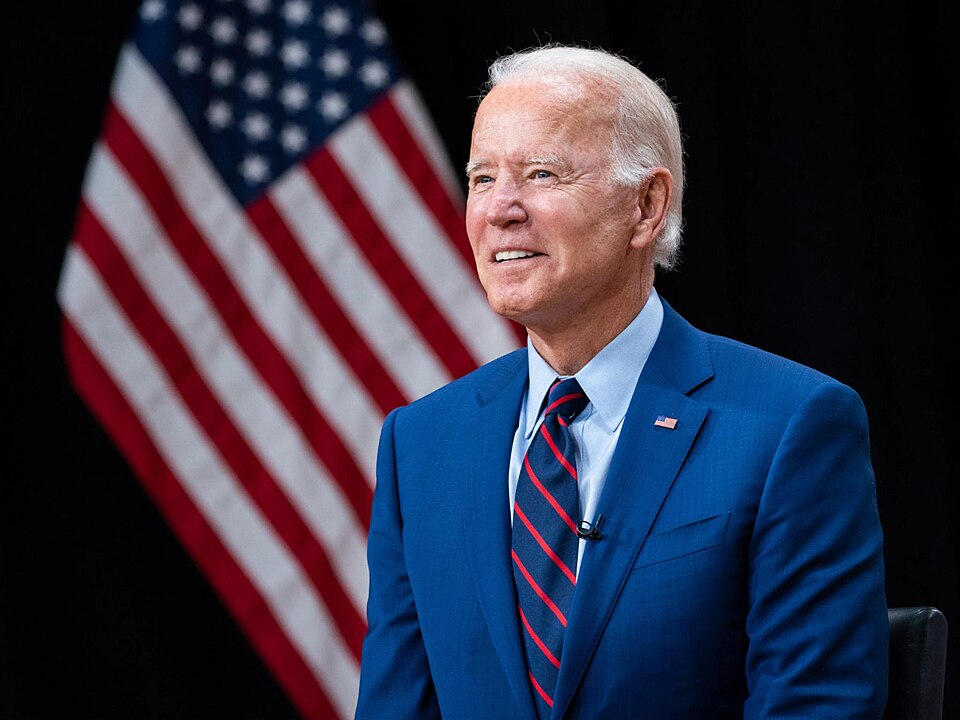
During his last term in office, former US president Joe Biden invested billions of dollars to counter arch-rival Russia in Ukraine. Conversely, his successor Donald Trump, whose second term began in January 2025, tried to convince his Russian counterpart Vladimir Putin to accept his peace proposal, but in vain.
Previously, Washington was determined to exhaust Russia militarily in Ukraine. Yet the new US National Security Strategy, perhaps having realised the futility of endless missions to keep the arch-rival at bay, stressed stabilising strategic relations with Moscow, instead of escalating tensions.
Many nations across the world fear that the ‘might is right’ policy – demonstrated by Putin in Ukraine, and now Trump in Venezuela – could prompt Chinese president Xi Jinping, who has been toying with the idea of annexing tiny neighbour Taiwan over the past years, to follow suit. However, the new US Strategy clearly stated that Washington was against any unilateral change and supported the status quo in the Taiwan Strait.
The new Security Strategy was reflected in the aggression that led US forces to overthrow Venezuelan president Nicolas Maduro
Another surprising element of the NSS was Washington’s barely veiled contempt for an old ally. The document noted that the larger issues facing Europe included activities by the EU and other transnational bodies that undermined political liberty and sovereignty; migration policies that were transforming the continent and creating strife, loss of national identities and self-confidence; censorship of free speech and suppression of political opposition; cratering birthrates, etc.
Lack of self-confidence was most evident in Europe’s relationship with Russia, reflected in how European nations saw Moscow as an existential threat, despite having a hard power advantage over the adversary, the US noted. This, even as President Trump set his sights on Greenland, a semi-autonomous region of Denmark, and aroused anxiety within the EU, urging it to shore up its defence expenditure significantly.
The Ukraine war began primarily because Russia was fiercely opposed to the US plan to make Kyiy a member of NATO, the America-led security cover for Europe against Moscow. Four years on, as a desperate Trump explored ways to end the war, the new US National Security Strategy put a lid on Kyiv’s dreams by noting that it was against perpetual expansion of NATO.
While it made elaborate reference to China, the NSS made only passing mention of the four-nation anti-Beijing Quad, referred to India as a commercial rather than strategic partner, and conveniently ignored rogue nation Pakistan’s track record as a safe haven for global terrorists.
‘We must continue to improve commercial (and other) relations with India to encourage New Delhi to contribute to Indo-Pacific security, including through continued quadrilateral cooperation with Australia, Japan and the United States (the Quad),’ the document said.
A rising China, which fancied itself to replacethe US as the number one economy in the world, and Beijing’s threats to Taiwan, Japan and South Korea, led to the birth of the Quad, which aimed to establish America’s supremacy in the strategic Indo-Pacific. This region was already the source of almost half the world’s GDP, based on purchasing power parity and one-third based on nominal GDP.
For a world trying to grasp the import of the new US National Security Strategy, one thing should be clear: American diplomacy and foreign policywill henceforth be transactional, implying a ‘give and take’ mindset. For, as the document stated, ‘the United States will prioritize commercial diplomacy, to strengthen our own economy and industries, using tariffs and reciprocal trade agreements as powerful tools’.
Amit Agnihotri is a Delhi-based journalist who has worked with several national newspapers and focuses on politics and policy issues