
Reality behind Trump’s Greenland grab
Reality behind Trump’s Greenland grab
Barry Gardiner reflects on the US administration’s latest policies, and suggests that Europe may have deceived itself about the continuing existence of a rules-based global order
There are some ideas so brilliant that only Donald Trump appears to understand them. Take the one about attacking Greenland to secure it as part of the United States’ strategic defence against Russian and Chinese influence in the Arctic. Few other world leaders could have dreamed up a strategy that involved attacking a NATO ally, thereby triggering Article 5 so that you are obliged to defend Greenland against yourself.
The US President’s advisors have told him that climate change (which he claims does not exist) reduced Arctic Sea ice last year to the lowest level since records began. Russia makes up 53% of the land bordering the Arctic and controls access to the Northern Sea Passage,which will reduce shipping times from the Pacific to the Atlantic by 40%. It has also seen Chinese and Russian cooperation over infrastructure in the Russian Arctic, with more than 50 new military installations on Russia’s northern border. But is its strategic military importance really what has prompted Donald Trump to say that he must have‘Greenland in the hands of the United States. Anything less than that is unacceptable’?
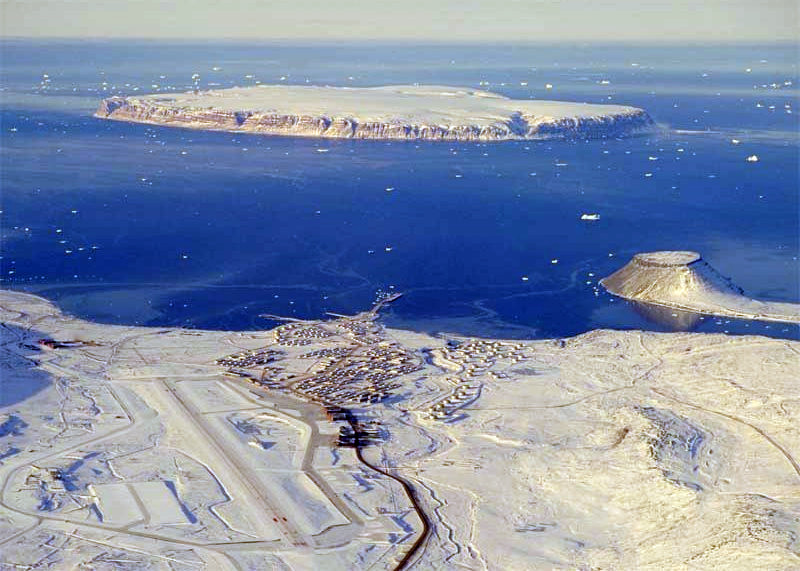
Under the 1951 Defence of Greenland Agreement, the US can already place whatever military infrastructure is considered necessary to defend Greenland and the countries of NATO. The US has one major Space Base at Pituffik, and approximately 2,500 military personnel spread over three military installations in Greenland already. These arecrucialelements in the ballistic missile early warning and space surveillance that supports both NATO and the US. The United States doesn’t feel the need to own Turkey because it has forward-based missile systems there, or to own Scotland because of RAF Leuchars, and the Naval Base at Faslane, so what makes Greenland different?
Dysprosium and terbium may not be household words today, but give them time. These and other rare earth elements (REEs) which Greenland has in abundance, are vital for high performance magnets, semi-conductors, laser technology and the future of the renewable energy industry. Whilst renewable capacity could not possibly be of concern to a president who spent 10 minutes of his speech to the UN General Assembly pointing out that climate change was a ‘expensive hoax’,the fact that China mines more than 60% and controls 90% of the processing of REEs is a trade dominance that Trump fears.
The fact that China mines more than 60% and controls 90% of the processing of REEs is a trade dominance Trump fears
Trump’s Greenland grab is certainly about defence, but it is the defence of the US economy and in particular of his friends in the oil industry rather than NATO. In the midst of all the political outrage about tariffs being imposed on NATO allies and the risk of the break-up of NATO, it is important to first adopt the mind of a historian 100 years from now; and second, to follow the money.
Greenland is not an isolated play. It is part of a strategic pattern that sees the US exerting its dominance over the world’s oil. US influence over the world’s fifth largest oil reserves was established more than 20 years ago in the Iraq war. Venezuela with 17% of global reserves – thelargest of any single country – is now in US control. An American Greenland wouldsee the US’s own reserves increased by 40% and jump above Kuwait in the global tables. If we were to project a new leader in Iran that was in any way beholden to the United States, suddenly the US would either own, or exercise significant control over 760 billion barrels,That is more than40% of global reserves.
Greenland is not an isolated play
The key here is not the actual ownership of the oil and gas itself, it is the ability to determine the currency in which they are traded. The strength of the US dollar and hence the US economy lies in the petrodollar: the fact that oil is traded in dollars rather than any other currency. What has been of particular concern to the US Treasury is that Venezuela and Iran were trading oil in rubles and in renminbi, weakening the power of the dollar as the global reserve currency. When you have a debt of $38.4 trillion, a quarter of which is held by foreign investors, the weaker your dollar becomes the higher the interest you have to pay on your national debt. The fact that Greenland also has significant reserves of gold, zinc, copper, nickel, titanium, niobium, tantalum, ytterbium, uranium and graphite deposits are all part of the bounty that ownership of Greenland would bring to the US Treasury.
Trump is stoking a campaign to re-arm Europe that many in the UK and the EU have accepted. There is an assumption that a wider European war with Russia is almost unavoidable. This is not based upon a realistic assessment of either Russian capability or Russian politics. It has taken Russia 11 years to occupy 19% of the land of Ukraine, much of which was already ethnically Russian. The idea that Russia, which last year spent $146 billion on defence, is about to engage in a full-on war with Europe, whose countries combined spent $457 billion, is simply not credible. In the words of American political scientist John Mearsheimer, it would be ‘like trying to swallow a porcupine’. So why is the US administration seemingly ‘asking the children to be scared of an empty wardrobe’?

Boosting European defence spending makes perfect business sense for the United States. Sixty-five percent of European procurement is for US-made equipment. Locking Europe and Russia into a perpetual state of hostility,and impoverishing them both, allows the US to pull away from NATO and re-orient its military might towards the Pacific and the country it perceives as the real threat – China.
It may be that Europe has deceived itself about a rules-based order. Perhaps might and power always did exactly what it wanted, and we simply didn’t notice because it suited us, or our interests were aligned. The history of US involvement in Chile, Nicaragua, Libya, Syria, Afghanistan, Iraq and now Venezuela can hardly be cited as examplars of how to follow Article 2 (4) of the UN Charter. The truth is that in order for a global rules-based system to work, there has to be a global policeman to enforce it. We used to think his name was Uncle Sam. Now we know it’s not.
Tanya Vatsa is currently a Global Intelligence Analyst, and a former Editor at the Journal of Indo-Pacific Affairs, US Dept of Defense. She completed her Master’s in Legal Studies at the University of Edinburgh after obtaining a law degree from Lucknow’s National Law University, India