
An Election to an Undemocratic Assembly
Barry Gardiner MP candidly reflects on the recent happening in the Pakistan-occupied Kashmir where a reign of terror was unleashed by the Pakistani security forces in the run-up to the elections
As a constitutional entity, the so-called Azad Kashmir, which is better known to the world as Pakistan-occupied Kashmir, is not just strange but unique. It has been given the trappings of a country, with a President, Prime Minister and even a legislative assembly, but it is neither a country with its own sovereignty nor a province with its own clearly defined devolved authority from the national Government. Under section 56 of the AJK interim constitution of 1974, the Pakistan Government can dismiss any elected Government in AJK, irrespective of the support it might have in the legislative assembly.
Strangely enough for an entity that purports to be a country, the constitution bars anyone from public office and prohibits them from participating in politics unless they publicly support the principle of Jammu and Kashmir acceding to Pakistan. Imagine that: a country all of whose politicians can be politicians only if they say they do not want to be a country. It should therefore come as little surprise that all the major civil and police administrative positions in AJK are held by Pakistani civil and military officers, nor that this putative country has no representation in the Parliament of Pakistan. The territory’s local representatives are excluded not just from the Pakistan Parliament but from even those Pakistani bodies that negotiate inter-provincial resource allocation and federal taxes.
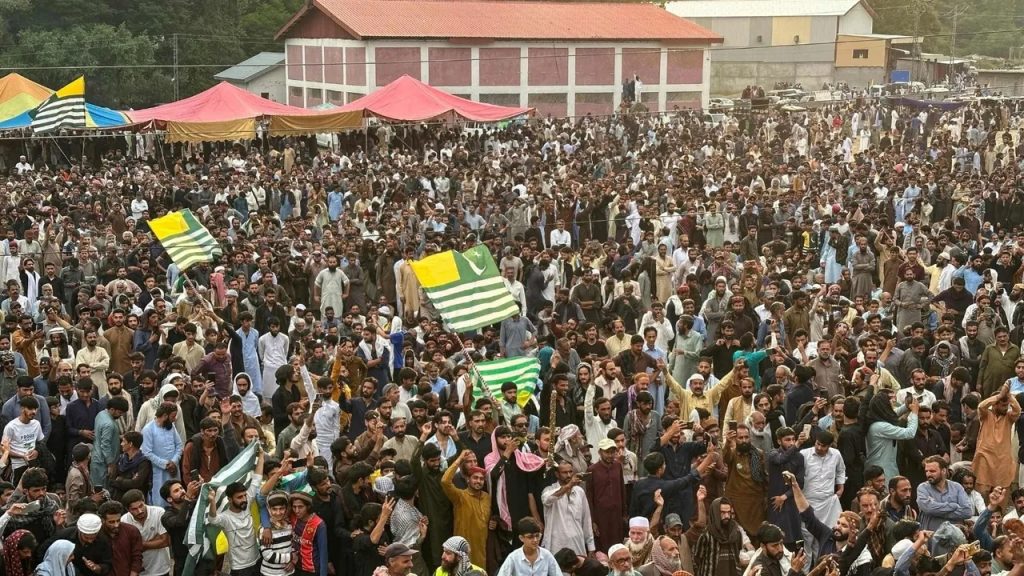
What may appear to be a surprise, is to find that the Joint Awami Action Committee (JAAC), the local civil society campaign group, has encouraged tens of thousands of its supporters to focus their protest not at the inequity of the whole system, but at one small element of it, namely the system of reserved seats for exiles from Indian-administered Kashmir who now live elsewhere in Pakistan. Their complaint, that it facilitated too much control by “outsiders”, might make sense in a governance system that had some semblance of independence in the first place. Azad Kashmir does not. It is not a country. It is not a province. It is not a state. It is a satrapy.
Washington’s interest in Nepal is hardening into strategy
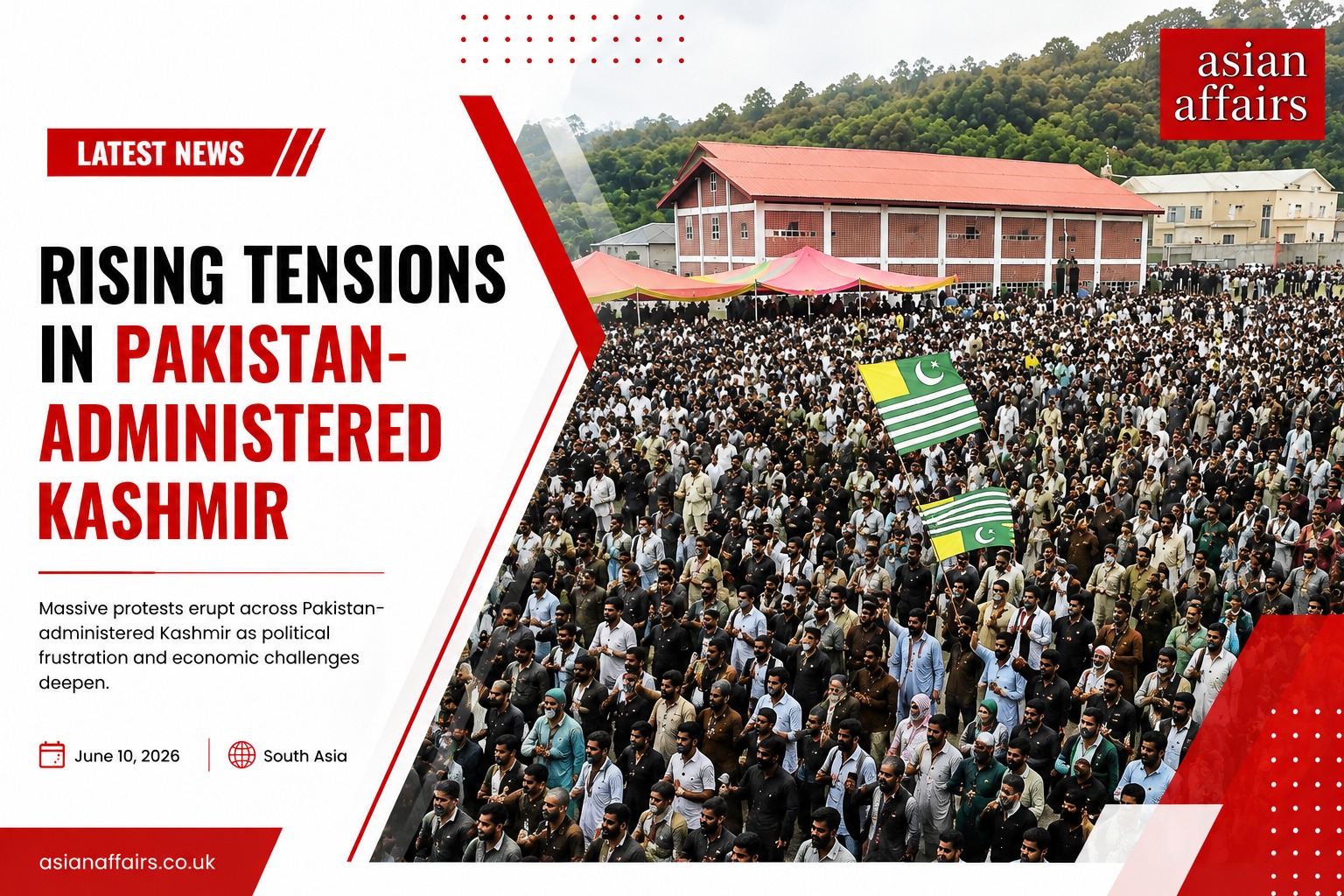
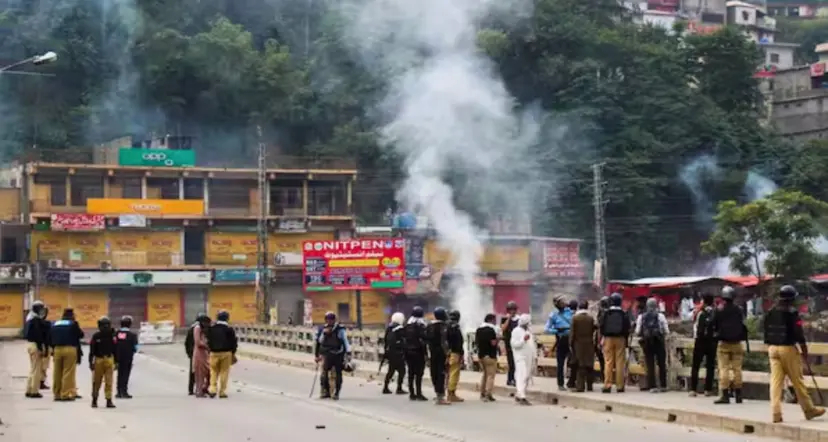
In the six weeks leading up to the elections on Monday 27th July, 40 people are said to have been killed by the security forces after JAAC was proscribed as a terrorist organisation, with a further 30 killed in live firing on crowds as protesters marched from Rawalakot to Muzaffarbad after the elections began. The elections were rescheduled to take place separately in the three divisions of Mirpur, Muzaffarbad and Poonch to enable the security forces to provide effective police control. However, the internet shutdown and media blackout which has hampered campaigning in this mountainous region has made it impossible to verify the alarming reports of dead bodies being abducted by the security services from the local hospital mortuary.
Balen Shah’s government has already signalled a strategic shift away from Beijing
Amnesty International has said that the disturbing reports from the region are “consistent with the Pakistani authorities’ long history of unlawful violence against protesters. A prompt, independent, and transparent investigation must be ordered into the security forces’ use of force against protesters.”
In many ways it is possible to see the present disturbance as the inevitable corollary to the action by Narendra Modi in August 2019 when he finally revoked Article 370 of the Indian Constitution. That action abolished the temporary autonomous status of Kashmir and mainstreamed it back into the Union of India. It in effect equalised citizens rights across the Union.
International condemnation of these abuses has been muted
Despite what is now seen as the success of that measure, in bringing greater economic prosperity to a region where local land rights had held back inward direct investment for decades, the Pakistan authorities have resisted any suggestion that they might seek to integrate Azad Kashmir in the same way by granting the region provincial status within Pakistan. Their rational has always been to preserve a status quo that might bolster its claim to Kashmir at the United Nations. It would appear that the irony of naming the region Azad, “Free”, Kashmir whilst denying it any status or self-determination for almost eighty years is one that is lost on the leaders in Islamabad.
The JAAC presents a new and serious challenge to the Pakistani political establishment. Their demands began not in the grievances from partition that were deliberately kept festering in order to exert control over that generation. This movement began talking about a more equal share of the profits of the Hydro power their region generates. This is a new generation of protesters who are demanding more control within Pakistan of the things that impact their daily lives. The 12 seats are a touchstone, not because they are reserved for the 600,000 supposed refugee voters from Indian Kashmir. They are a touchstone because those people live elsewhere in Pakistan and have no interest in furthering the interests and economy of the Azad Kashmir area.
Pakistan’s attachment to democracy has always been dependent on the whim of the military and the JAAC appears to have no doubt about who it must target with its demands. Their leader, Umar Nazir Kashmiri reportedly told supporters that the JAAC had written directly to army chief Field Marshal Asim Munir, “We believe real authority currently sits with Rawalpindi” (Pakistan’s military establishment), adding “That’s why we’re forced to negotiate through that channel, since nobody else actually holds the authority.” Rawalpindi may find that their old ways of doing business are less effective on a new more savvy generation.
Barry Gardiner is a UK Labour politician who is the Member of Parliament for Brent West