
STEERING THE GLOBAL SOUTH?
Steering the Global South?
A recent TDF seminar addressed the role played by governments in perpetrating or supporting acts of terror, the rationale behind this and its far-reaching consequences
India will become not just a superstate but a superpower, though it may take another generation to achieve, while the nation can be a voice of the Global South, but not alone, as alliances, partnerships and agile relationships will be key. These were among views expressed by a panel of experts, convened to address the central topic of India’s role in the Global South, and its growing regional and international influence.
In his opening address, TDF President Lord Bruce said India’s 2023 G20 presidency, under Narendra Modi’s theme Vasudhaiva Kutumbakam (‘One Earth, One Family, One Future’), emphasised representing developing countries and shaping a shared future through the Voice of the Global South Summit. Lord Bruce traced this vision to Rabindranath Tagore’s 1917 call for ‘social co-operation’, John Quincy Adams’s belief in influence by example, and Jawaharlal Nehru’s commitment to an independent foreign policy and India’s rise as a major power. This tradition, he said, was reflected at the 16th BRICS+ summit in New Delhi, where India hosted Xi Jinping and Vladimir Putin, and in the New Delhi Declaration’s view of BRICS as an increasingly political forum for cooperation among major emerging economies.
Lord Bruce cited Rahul Banerjee’s view of BRICS as committed to strategic autonomy and resisting external pressure. In a multipolar world shaped by a contrarian US and rising China, he asked what options India has as it seeks to lead the Global South. Drawing on John Ikenberry, he suggested India and Brazil may pursue a democratic ‘third way’, preserving multilateralism without aligning fully with either power. S. Jaishankar likewise advocates engaging major powers while broadening partnerships, raising the question of whether India will define itself or be defined by the world. Lord Bruce also noted critics’ concerns. Christophe Jaffrelot argues China is the key factor, with a greater threat from Beijing potentially pushing India closer to the West. He concluded with C. Raja Mohan’s warning, prompted by Trump’s latest tariffs: will India jump ‘from the American frying pan into the Chinese fire’?
While India is certainly a voice for the Global South, said Dr Roli Asthana, an Associate Fellow at Chatham House and Senior Advisor at ODI Global Advisory, there is no single Global South voice. The term lacks a clear organising principle, she argued, as it is neither a bloc nor a geographic or income category, and encompasses countries with diverse interests and relationships. Asthana said the key challenge is turning rhetoric and advocacy into results. India has long been an effective advocate and convener, and its strength remains its ability to bridge divides. Recent successes include securing the 2023 G20 declaration, bringing the African Union into the G20, hosting Voice of the Global South summits and advancing BRICS cooperation. The real test is whether these efforts deliver progress on debt, climate finance, supply chains, conflict and institutional reform.
China’s success in Africa has come partly from tailoring its approach to individual countries rather than treating the continent as a bloc
India has made practical contributions through digital public infrastructure such as UPI and Aadhaar, noted Asthana, although its advocacy is sometimes limited by protectionist trade policies. As strategic autonomy gains wider acceptance, India faces growing pressure from China’s expanding influence and reduced US engagement. To remain an independent rule-shaper, India must balance diverse partnerships, raise living standards and rebuild trust with neighbours. Initiatives such as Partners for Multilateralism reflect this ambition, but India’s leadership of the Global South remains a work in progress.
Power depends on how difficult it is for others to achieve their goals without India
Looking at the topic from an African perspective was Dr Fikayo Akeredolu, a Postdoctoral Research Associate at the Smith School of Enterprise and the Environment, University of Oxford. While India and Africa are similar in terms of population size, she said, Africa is not a single entity but 54 countries with different economies, energy systems, resources and development priorities. That diversity complicates the idea of any one country speaking for Africa. That said, India can be an important partner, but effective engagement requires recognising these differences. China’s success in Africa has come partly from tailoring its approach to individual countries rather than treating the continent as a bloc; any country seeking influence in Africa must do the same. India already has credibility through its support for the African Union’s G20 membership and its position as Africa’s fourth-largest trading partner, added Akeredolu, with trade reaching about $82 billion in 2024–25. India and many African countries also align on issues such as climate justice.
The key test of this partnership, Akeredolu asserted, lies in climate finance and energy. Africa has 20% of the world’s population but attracts less than 3% of global energy investment, while around 600 million people still lack electricity access. For many African countries, the challenge is not energy transition but energy access, alongside industrialisation, job creation and economic growth. Both India and Africa need significant development and climate-finance investment, limiting India’s ability to act as a traditional donor. The more important question, she concluded, is whether they can build a different model of South-South cooperation. Ultimately, India’s role will be judged by how far it helps African countries address energy access and climate-finance challenges.
As China’s growth slows, India’s global importance is likely to rise
Professor Abhinay Muthoo, Research Lead and Fellow at the National Institute of Economic and Social Research, examined bargaining power, arguing that size does not equal power, nor power influence. He asked how India can turn its growing economic and strategic weight into bargaining power and influence, highlighting three factors: options, indispensability and credibility. India’s ties with the US, Europe, Russia, BRICS, the Quad and the Global South provide alternatives, strengthening its leverage through strategic autonomy. Muthoo argued that power depends on how difficult it is for others to achieve their goals without India; as India becomes more important in areas such as climate change, supply chains, technology, Indo-Pacific security and institutional reform, its bargaining position improves. Economic growth increases not only India’s size but also its value to others. Credibility also matters: others must trust India’s commitments and willingness to bear costs when negotiations fail. In this sense, credibility and patience can be as important as resources.
Muthoo noted a tension between strategic autonomy and influence: autonomy preserves options and leverage, while influence often requires commitment. Bargaining power differs from influence, which involves shaping agreements, coalitions, choices and agendas. The key question is how effectively India can convert its growing weight into leverage and leverage into influence. The same applies to leadership: greater power does not automatically make India the voice of the diverse Global South. India may gain bargaining power and influence, concluded Muthoo, but leadership depends on others choosing to follow. Ultimately, the challenge is turning bargaining power into lasting international influence.
Sir Vince Cable, former Liberal Democrat leader, LSE Professor in Practice, ODI Global Advisory Senior Advisor and former Business Secretary, described India through three concepts: economic superstate, flawed democracy and multi-alignment. He noted that India is already the world’s third-largest economy by purchasing power and is growing at 6–8% annually, outpacing most major economies. Driven by digital technology, Aadhaar, market integration and decades of reform, this growth could make India comparable in size to the US and China by mid-century. As China’s growth slows, India’s global importance is likely to rise. This economic growth also has political implications, added Cable. Surveys suggest India enjoys unusually high public trust because many people believe future generations will be better off, unlike in many Western countries, where trust is much lower.
India is best understood as a democracy, noted Cable, though perhaps a flawed one rather than a full democracy. It retains competitive elections and institutional checks, but its democratic credentials are contested. This political model, alongside economic growth, contributes to India’s influence. A further source of influence is Indi’s policy of multi-alignment. It works with the US through the Quad to balance China, while also participating in organisations such as the Shanghai Cooperation Organisation and BRICS. These relationships reflect India’s desire to maintain strategic autonomy, address security concerns and reduce dependence on dollar-based financial systems. India also values its long-standing relationship with Russia, which remains an important security and economic partner. Overall, concluded Cable, multi-alignment gives India flexibility and helps it hedge against geopolitical risks, making it a rational strategy for the foreseeable future.
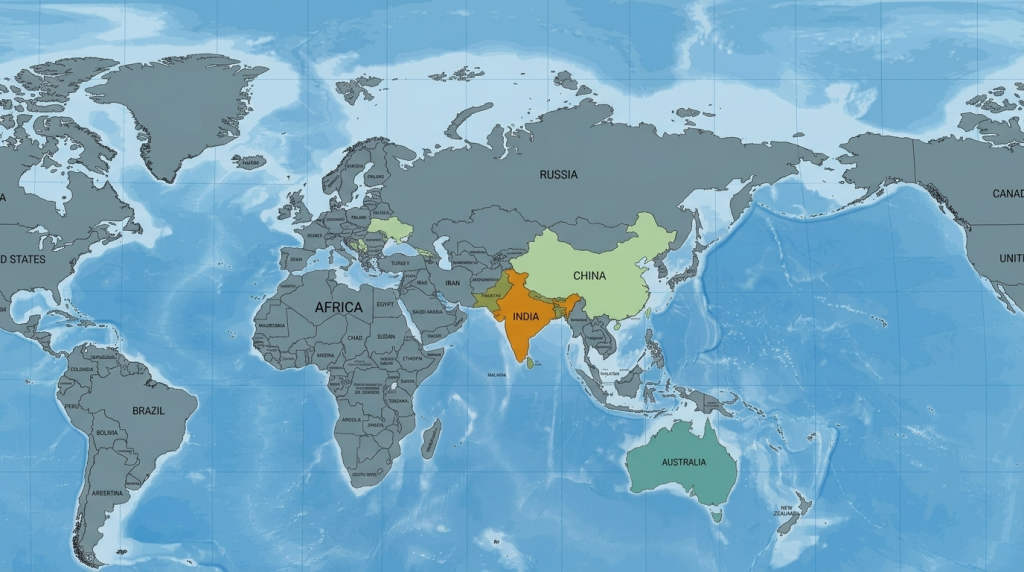
Since Trump’s return, said TDF Chair Barry Gardiner MP, we have witnessed the erosion of global security. This goes beyond tariffs, NATO ambivalence, or ties with Putin. Events in Venezuela and Greenland reflect a broader strategy of fostering dependency, insecurity and fear. These issues may seem European, added Gardiner, until we consider US and Israel conflicts in the Middle East. With the Strait of Hormuz closed by war in Iran, shortages of diesel, gas and fertiliser have spread across Asia, raising doubts about whether the US remains a reliable ally. For many, that question is already settled. Into this uncertainty steps China. As the US withdraws, China has expanded its Belt and Road Initiative across about 150 countries, using infrastructure and trade deals to build dependency under the guise of development. Where does that leave India? pondered Gardiner. At the centre. It is part of the Quad with the US, Japan and Australia, yet bound by no formal alliance. It engages Russia and China through the SCO and BRICS while maintaining defence ties with the West. Analysts call this strategic autonomy; simply put, it refuses to be forced into a camp. That is the model the Global South needs, concluded Gardiner: not blocs or bandwagons, but a network of security partnerships that protects sovereignty rather than surrendering it.
MJ Akbar is the author of several books, including Doolally Sahib and the Black Zamindar: Racism and Revenge in the British Raj, and Gandhi: A Life in Three Campaigns
To watch the full discussion, tune in to