
Chinks in Asia’s energy armour
As US-Iranian tensions continue, Tanya Vatsa reflects on how Asia’s economic architecture remains tethered to geopolitical faultlines far beyond its borders
In the narrow alley ways of North Delhi, mornings now begin with calculation rather than routine. Families wake before sunrise to monitor gas pressure that may or may not arrive. Tea kettles remain cold for hours, restaurants shorten their menus, people scramble for their place in queues outside fuel stations and entire neighbourhoods re-organise daily life around the uncertainty of fuel access. What appears, at first glance, to be a localised shortage is in fact the visible edge of a much larger geopolitical rupture, one whose shockwaves are spreading quietly but decisively across Asia.
The war surrounding Iran has begun to redraw the region’s economic landscape, not through missiles alone, but through the far subtler weaponisation of energy insecurity. Across Asian capitals, officials are confronting a reality they had long hoped globalisation had softened: that prosperity built upon imported fuel remains dangerously vulnerable to distant conflict.
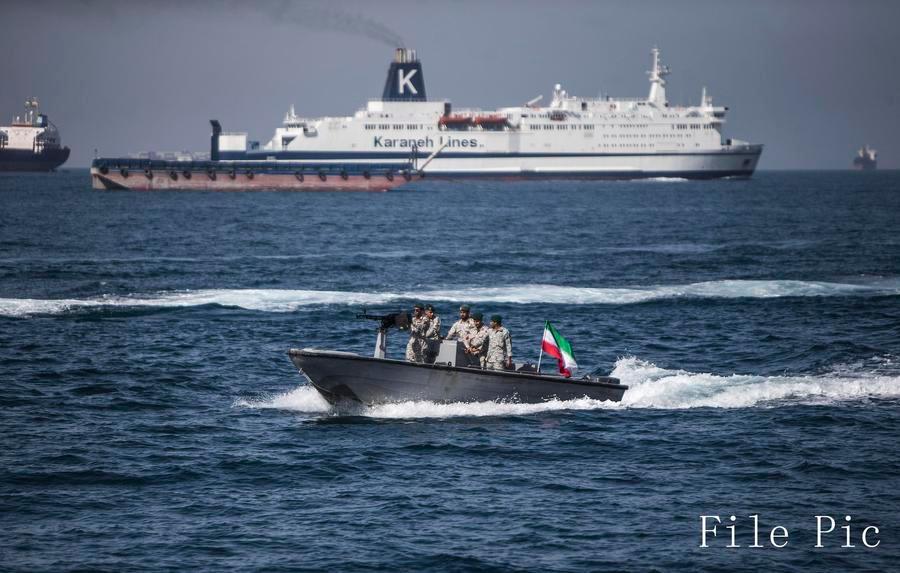
For decades, Asia’s rise depended upon uninterrupted maritime energy flows. Tankers crossing the Strait of Hormuz carried more than oil; they carried the resources fuelling the continent’s industrial expansion, urbanisation and political stability. Every escalation in the Gulf sends ripples through supply chains stretching from Bangladesh’s textile hubs to Japan’s industrial corridors, revealing the extent to which Asia’s economic architecture remains tethered to geopolitical faultlines far beyond its borders.
The consequences are unfolding unevenly, but with remarkable speed.
In Bangladesh, authorities have sought external financial support from the International Monetary Fund (IMF) as surging fuel import costs intensify pressure on foreign reserves and inflation. The challenge facing Dhaka is symbolic of a broader dilemma confronting many developing Asian economies: how to preserve domestic stability while navigating an increasingly hostile global energy environment. Subsidising fuel risks might widen fiscal deficits and removing protections risks social unrest.
Further west, Pakistan’s fuel shortages have evolved into something more psychologically corrosive than temporary disruption. Scarcity has seeped into domestic life itself. People and businesses are struggling to secure cooking gas, while transport costs continue to rise across urban centres already strained by economic fragility. What looks like inflationary pressure at the outset is likely to translate into slow erosion of public confidence within states already grappling with institutional stress.
India, despite its greater economic resilience, has not escaped the turbulence. Fuel prices have risen over 7.5 Rs per litre, threatening to push retail inflation to 5% by June. The hospitality sector has taken a hit, with several small to medium outlets shutting down across the country due to the shortage of cooking gas.
Yet the impact extends beyond domestic economics. The aviation sector has become increasingly exposed to the volatility of jet fuel markets. Airlines across the region have begun reducing domestic routes and recalibrating schedules with major airlines like Air India,IndiGo and SpiceJet requesting immediate government intervention to ensure continuation.
Prosperity built upon imported fuel remains dangerously vulnerable to distant conflict
Tokyo announced the release of about 80 million barrels from its strategic oil reserves – equivalent to roughly 45 days of domestic supply – as part of a broader International Energy Agency (IEA) effort to stabilise global energy markets after disruptions linked to Middle East tensions. The release is one of Japan’s largest-ever drawdowns of emergency stocks. Alongside this, the government has expanded gasoline, electricity and gas subsidies, used contingency reserves to curb utility bills, and unveiled a ¥3 trillion ($19 billion) supplementary budget aimed at easing household costs and cushioning the impact of higher import prices and a weaker yen.
In the Philippines, President Ferdinand Marcos Jr. declared a state of national energy emergency in March 2026, amid fears that conflict-related disruptions in the Middle East could threaten fuel supplies and drive up inflation. The government said it had about 45 days of fuel reserves, authorised emergency fuel procurement, moved to secure an additional 1 million barrels of oil, created a crisis committee to oversee the supply of essential goods, and later activated a 20 billion peso ($333 million) fuel-security fund to stabilise supplies and cushion consumers from price shocks.

Pakistan’s fuel shortages have evolved into something more psychologically corrosive than temporary disruption
South Korea has also been drawing on strategic energy stockpiles to strengthen supply resilience and the government has responded to elevated energy prices by expanding electricity and gas bill support, providing targeted relief for vulnerable households and small businesses. Major oil producing countries like Indonesia, Malaysia and China have implemented temporary export restrictions to prioritise domestic needs, further limiting options for the import-dependent Asian countries.
Shipping lanes, once viewed primarily through commercial logic, are increasingly interpreted through military and strategic lenses. Insurance premiums rise alongside naval deployments as fuel prices react not merely to supply and demand, but to speculation surrounding escalation itself.
Statements made by warring parties have seen stocks rise and fall erratically alongside prices of oil and gold. Countries with diversified suppliers, strategic reserves and stronger currencies may absorb prolonged instability, whereas import-dependent economies with weaker fiscal buffers face the prospect of sustained inflation, slower growthand deepening social pressures.
Asia spent decades positioning itself as the centre of 21st century economic dynamism, yet many of its economies remain structurally vulnerable to disruptions originating thousands of miles away. The Iran war has exposed not merely dependence on fuel imports, but on a global order whose predictability is steadily eroding.
The queues for gas cylinders in Karachi, the anxiety within Dhaka’s financial institutions, the recalculations inside Delhi’s policy circles and the strategic deliberations unfolding in Tokyo and Seoul all point towards the same conclusion. Asia’s growth story, long powered by uninterrupted access to external energy, is mired in uncertainty. The vulnerabilities exposed by the war are likely to endure long after the immediate conflict ends.
Tanya Vatsa is currently a Global Intelligence Analyst, and a former Editor at the Journal of Indo-Pacific Affairs, US Dept of Defense. She completed her Master’s in Legal Studies at the University of Edinburgh after obtaining a law degree from Lucknow’s National Law University, India