
Fall and rise
Y.S. Gill charts the improbable political ascent of Nepal’s new leader, and the challenges he faces both domestically and abroad
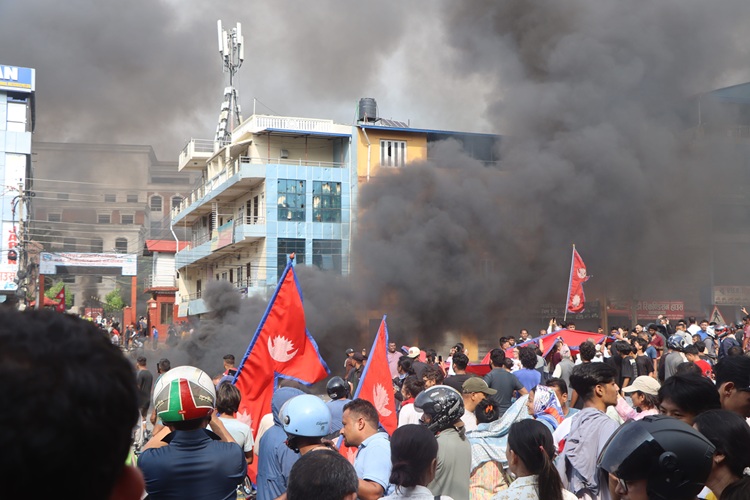
In September 2025, one of the most dramatic political collapses in South Asian history unfolded in Kathmandu. Mass demonstrations led by disgruntled young people – widely referred to as the ‘Gen Z protests’ – led to the unceremonious ouster of Prime Minister K.P. Sharma Oli’s government, a broad coalition comprising Oli’s CPN-UML, Nepali Congress, Janata Samajbadi Party and Loktantrik Samajbadi Party. The prime minister’s resignation came after security forces shot dead 21 protesters during demonstrations on 8th September last year. Fourteen of the victims were 28 or younger.
The elections that followed in March 2026 resulted in a crushing defeat for traditional parties and the emergence of the Rastriya Swatantra Party (RSP) with a massive majority. Balendra Shah, 36, popularly called Balen, was appointed prime minister. Previously the mayor of Kathmandu, Balen is a structural engineer by education and has been a popular rapper. He joined the RSP after resigning from mayoralty in January early this year.
The Oli government’s fall was long in the making. Its ban on social media, aimed at silencing anti-government voices, ultimately pushed the youth to take to the streets. The list of scandals surrounding the administration is extensive: allegations of embezzlement of funds meant for the construction of Pokhara Airport; a telecom procurement scam; a ‘visit visa’ scam, wherein immigration officers allowed Nepalese to fly abroad on tourist visas to work illegally; and cooperative finance companies run by cronies of the ruling parties that had syphoned off depositor funds running into billions of rupees.
But the rot was deeper than corruption. Oli had spent years using Chinese infrastructure investment as a strategic counterweight to India. The involvement of ruling party family members in the scams had become a widely discussed topic.
Kingmaker in the shadows
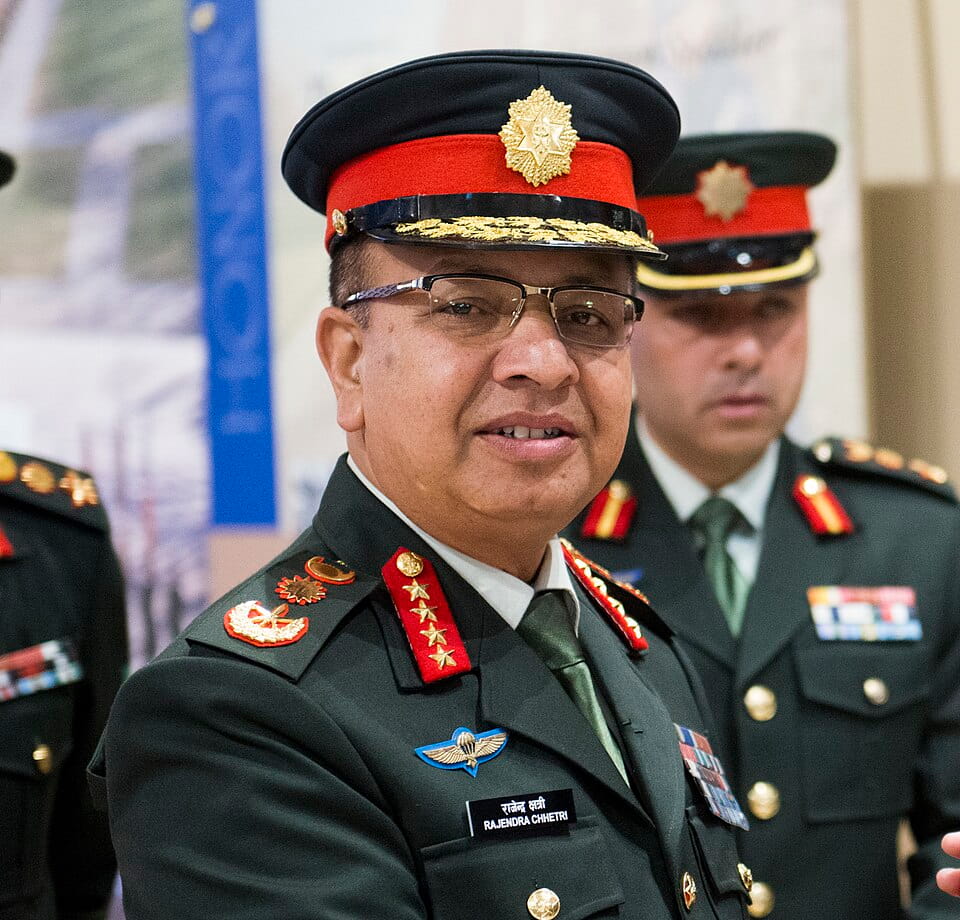
What distinguished Nepal’s 2025 upheaval from a simple street revolution was the decisive, carefully calibrated role played by the Nepali Army (NA). Though the army has never formally seized power in Nepal, it has, in practice, been determining who holds power at every critical juncture since the monarchy’s fall.
Even as the protests peaked, the army closed and occupied Tribhuvan International Airport. It was a show of armed muscle, sending the message to all parties involved in the clashes that the military held the ultimate levers of power. When the violence escalated, Gen Z leaders and NGO representatives were invited to talk with the Chief of Army Staff, General Ashok Raj Sigdel, to initiate the process of negotiations and dialogue. As an outcome of their discussion, an interim cabinet was established, and former chief justice Sushila Karki was appointed interim prime minister.
Washington’s interest in Nepal is hardening into strategy
But this did not happen as smoothly as it may appear. It was reported that while Gen Z representatives wanted Karki as interim prime minister, the army favoured the pro-monarchist Durga Prasai. Had the army’s proposal been accepted, it would have handed the monarchist elements exactly the foothold they were seeking. But Gen Z representatives apparently held firm.
Protests outside the army headquarters eased only after Kathmandu Mayor Balen Shah voiced his support for Karki. Army chief Sigdel then contacted Karki and forwarded Gen Z’s recommendation to President Paudel. ‘The Gen Z group was too large to meet the President all at once, and they didn’t fully trust any state institutions at the time,’ an official said. ‘Even Kathmandu Mayor Balendra Shah expressed willingness to work with the army, which made coordination smoother.’
The army’s behind-the-scenes preference for Prasai, a monarchist agitator, who had rammed his truck into police officers, was a telling early signal of its pro-monarchy institutional instincts that are apparent to this day. After consultations within the army, the decision to appoint Karki was conveyed to the president’s office. This sequence matters because it was the army – not parliament, not the president acting independently, that effectively validated and enabled the transition. Nepal’s military occupies a constitutional grey zone. Though formally subordinate to civilian authority, but in practice it is a “veto player” at moments of crisis.
Balen Shah’s government has already signalled a strategic shift away from Beijing
Facing public scrutiny for its conduct, the Nepal Army in January issued a formal statement reaffirming that it had acted strictly within constitutional limits during the September protests, emphasising respect for civilian authority and restraint in the use of force. ‘The Army is loyal to the Constitution and remains committed to national unity and national security under the established government,’ the NA said, adding that the institution had no political ambition. It argued that its actions had helped end the political vacuum. The defensiveness of the statement is itself revealing. Would an institution – and more so, the army – that truly had no political role need to publish a 1,200-word justification for its actions?
International condemnation of these abuses has been muted
Interim bridge: Sushila Karki
An interim government was formed on 12th September 2025. Karki was chosen based on a consensus between army and Gen Z representatives. Interestingly, an online vote was conducted by protesters via a poll on Discord to arrive at a conclusion, and only then agreed upon during talks with the Nepali Army. A former Chief Justice, a graduate of India’s Banaras Hindu University, and a figure known for fighting the judiciary’s own corrupt establishment from within, Karki represented everything the Oli era was not. India backed her government from the start and kept putting pressure on key Nepali political actors to support Karki’s single focus on timely elections, fearing prolonged instability on the Nepali side of the border could spill over to the Indian side.
New PM
At the centre of Nepal’s seismic upheaval is its new Prime Minister, Balen Shah. His transition from political outsider to the highest office of the land is one of the most improbable political rises in modern South Asian history. He defeated former Prime Minister K.P. Sharma Oli in Jhapa 5 by a landslide, leading his party to a historic victory. Balen Shah received nearly 70,000 votes – the highest in Nepal’s electoral history. Twelve RSP candidates received more than 50,000 votes each under the first-past-the-post system. The RSP’s 182 of 275 seats gives it the first single-party majority in Nepal since 1999.
Shah formed a 15-member cabinet that achieved 33% female representation for the first time in Nepal’s federal history. Five women MPs were appointed to ministerial roles, including to Health, Law & Justice, General Administration, Agriculture, and Women & Children. The oldest member of his cabinet is 51 years old. Notably, Shah himself holds the Defence and Home Affairs portfolios in addition to the Premiership. This apparently is a deliberate attempt to maintain civilian control over the security services, given the army’s kingmaker role in the events that brought him to power.
Balen Shah’s relationship with the Nepali Army is complex. While it helped him get to power, he is now ruling under public scrutiny as the army tries to work its way through the fallout from the September 2025protests. The Karki Commission framed charges against several political leaders and security officials, showing the Army is involvement in governance. Shah’s government has taken a dual track to implement the Commission’s findings – that of civilian accountability, and a parallel track against security officials responsible for shooting down protestors.
And the army’s role as a political broker makes things all the more complicated. It has changed its support, particularly in terms of backing different political affiliations based on the pressures of leaders, including Shah. This relationship will be key in any future political crisis. Whether the army will side with civilian rule or revert to its elitist institutional preferences is yet to be seen.
Meanwhile, Washington’s interest in Nepal is hardening into strategy. The Trump administration in 2025 initially ended more than $329 million in foreign assistance to Nepal and paused Millennium Challenge Corporation projects. However, Secretary of State Rubio exempted the MCC Nepal Compact from the pause, and a November 2025 amendment increased MCC funding by $50 million. The MCC compact, which China has consistently opposed as a vehicle for American strategic influence, has now been explicitly protected and expanded.
Balen Shah’s government has already signalled a strategic shift away from Beijing by vetting Chinese projects, and was the first to get a high-level visit from the US diplomatic corps.The political landscape after the March 2026 elections has changed the dynamics, with the decline of the communist parties, a key ally of China, allowing Shah to promote a more Western-aligned foreign policy. The government’s promise to deepen relations with the US while reviewing Chinese investments marks a departure from previous pro-China policies.
Shah’s government, it seems, is a sharp departure from the previous administration’s pro-China tilt. It is open to accountability in the security sector and is on the right side of the US. But issues like the Lipulekh border dispute and re-negotiation of the 1950 treaty with India remain contentious and could test the new government’s claims of sovereignty.
Balen Shah’s tenure is indeed a significant milestone in the political evolution of Nepal, with a young leader having a strong reform agenda, but also grappling with the dual challenges of establishing civilian control over the Army and navigating the complexities of Nepal’s foreign policy, especially in the context of the competing interests of China and the United States.
YS Gill is a political analyst