
Whither the Quad?
Amit Agnihotri, assesses the influence, even relevance, of the US-led grouping in today’s volatile geopolitical landscape and shifting alliances
Originally established in May 2007, the US-led four-nation Quadrilateral Security Dialogue – known as the Quad – underwent a period of inactivity,only to be revived in 2017. It gained currency in the following years, when Washington looked determined to counter an increasingly aggressive China in the Indo-Pacific.
Since the first Quad leaders’ summit in 2021, regular such gatherings of its four members – the US, Japan, India and Australia – gave the anti-China bloc a sense of purpose.
This move provoked Beijing to dub the bloc an ‘Asian NATO’, a military grouping intended to counter the Asian Dragon, just as the Atlantic alliance had protected Europe from the Russian threat since 1949.
However, the bloc’s sense of purpose seems to have been missing since September 2024, when the last Quad leaders’ conclave was held in Delaware under then President Joe Biden. India was to host the 2025 summit but it had to be deferred due to several reasons, including US involvement in various global hotspots and the souring of Washington’s relations with New Delhi.
First of the hotspots was Ukraine, which neighbouring Russia invaded in February 2022, startinga war that challenged the global order. In the years that followed, the US became entangled in Gaza, where its ally Israel ran riot against the Palestinians after a bloody provocation on October 7, 2023. The latest hotspot is Iran, where Washington’s massive military misadventure known as ‘Operation Epic Fury’ has turned into operation epic failure, with peace still elusive.
Washington tried to dominate these war zones to reassert its superpower status. This has come under question since 2021, when America decided to exit Afghanistan almost 20 years after occupying the war-torn nation to pursue its global war on terror.In the process, US focus on the strategic Indo-Pacific region, and the Quad,was deflected. Moreover, India-US ties grew strained during the same period, as the Trump administration publicly expressed its displeasure over New Delhi buying discounted Russian oil.
For India, which claimed strategic autonomy from both US and Russia, purchased discounted Russian oil primarily to address its energy security needs.But America saw the move as New Delhi trying to bail out Moscow, which was reeling from the impact of US economic sanctions, imposed for invading Ukraine.
India’s defiance, the subsequent punitive US tariffs against New Delhi, a skewed trade deal, Trump’s proclamations that India was a ‘dead’ economy, and his constant boasts of stopping an India-Pakistan conflict in May over a terrorist attack in Kashmir, created diplomatic distance between the two countries. Under such circumstances, the 2025 Quad leaders’ summit could not be held in New Delhi.
Beijing dubbed the bloc an ‘Asian NATO’
When Donald Trump was serving his first term in office, China was America’s enemy number one, as per an assessment of the intelligence agencies. Trump 1.0 was hawkish on China, a trait he carried through to his second term while assembling his new administration in early 2025.
Yet somewhere along the line, the US strategy on China appears to have shifted from confrontation to cooperation, from countering the Asian Dragon to managing its adversary, which may nurse a dream to replace America as the world’s number one economy.
Revealed in November 2025, the new US national security strategyeven articulated this strategic shift, which was illustrated in practice duringPresident Trump’s May 14-15 meeting with Chinese president Xi Jinping in Beijing.
Thesummit, coming in the midst of America’s misadventure in Iran, was marked by elaborate protocol but left the world guessing as to whether there were any strategic outcomes, although there were some noises that both the US and China planned to push ‘mutually advantageous’bilateral trade.A key element of the national security strategy 2025 was America’s plan to continue pursuing high economic growth, sustaining it through a mutually beneficial economic relationship with China. This would allow the US to take its $30 trillion economy (at 2025 levels) to $40 trillion by 2030s, in order to maintain its‘world’s leading economy’ status.Xi, who is equally keen to push China’s economy further, is scheduled to visit America in September, when it is hoped some bilateral deals may materialise.
India-US ties grew strained as the Trump administration publicly expressed its displeasure over India buying discounted Russian oil
It is notable that Xi refrained from commenting on the ongoing Iran war, even if Trump expected him to help bring an end to the conflict, whichcontinues to impact global energy security. Yet Xi did caution Trump against supporting Taiwan, which Beijing considers a breakaway province and nurses a desire to annex in the future.
The Trump-Xi summit came just days ahead of the Quad foreign ministers’ meeting in New Delhi on May 19-20, which brought focus back to the anti-China bloc. Over the past few months, India had stopped buying Russian oil at the behest of America, yet Trump chose a rogue Pakistan as mediator in the Iran-US peace talks, further irking New Delhi.
This latest Quad foreign ministers’ conclave provided an opportunity for US Secretary of State Marco Rubio to repair the broken relationship with India, and also to reassure fellow group members that the USretained its focus on the Indo-Pacific.
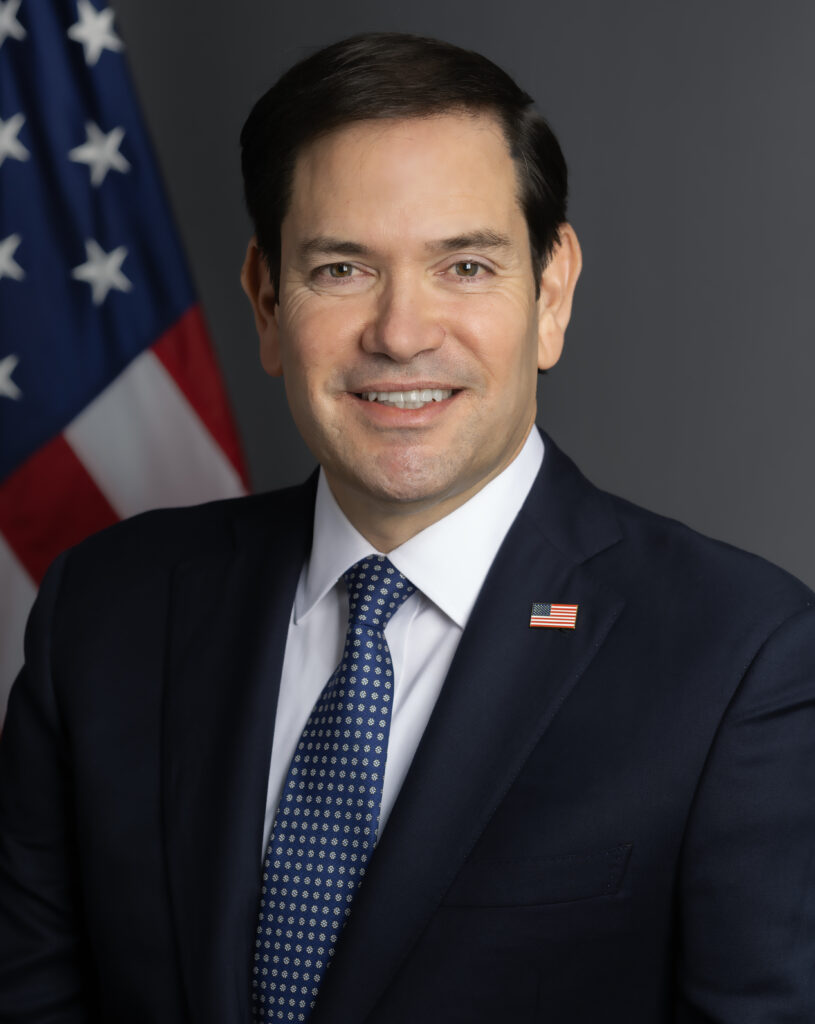
A joint statement, issued after the foreign ministers of Australia (Penny Wong), India (S Jaishankar), Japan (Toshimitsu Motegi) and US Secretary of State Marco Rubio met to discuss the Quad’s agenda, noted that the group had agreed to launch an initiative on Indo-Pacific Energy Security, to build a port in Fiji, and to have a critical minerals framework. Moreover, the group expressed concern over the situation in the East and South China Seas, where China has been asserting itself over the past years. As expected, Beijing said cooperation between countries should contribute to regional peace, stability and prosperity, and should not target any third party.
In the years before the Quad was revived, most US strategists saw India as a strong and effective Asian counterbalance to a rising China. That view may still be held by many in US diplomatic circles and even within the incumbent administration, but Trump’s China tilt is hard to ignore.
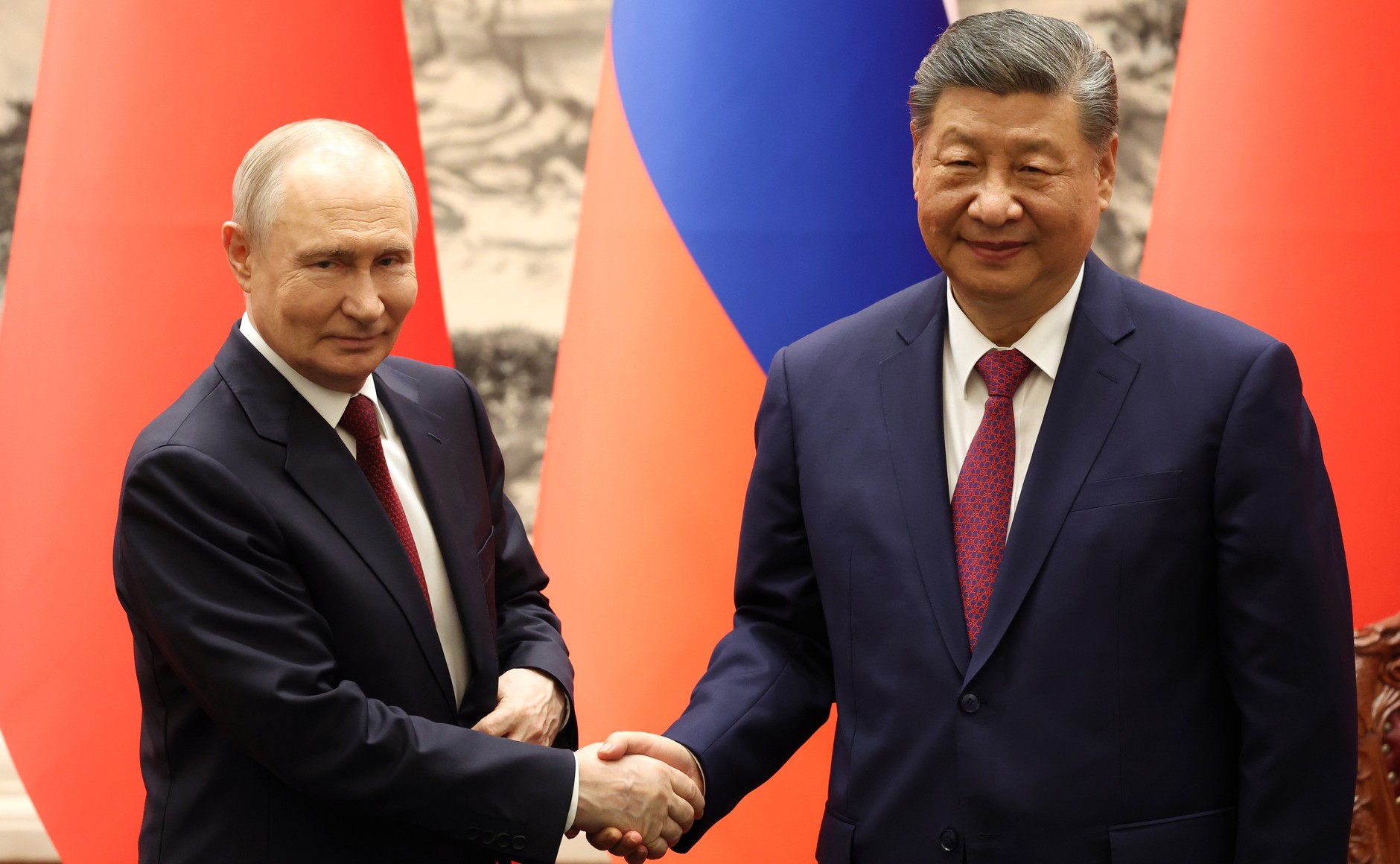
China knows this. Therefore, days after hosting Trump, Xi welcomed his new friend, Russian president Vladmir Putin, on May 20-21. Besides the visible warmth of Xi-Putin ties, the signing of several pacts indicate how closely China and Russia are working together to shape the new world order. In contrast, the meeting between Trump and Xi, leaders of two of the world’s largest economies, had little to showcase.
India, too, knows this. New Delhi has therefore been trying to normalise its relations with China (despite serious border disputes), which emerged as a geopolitical centre after both the US and Russian president visited Beijing within a week. This showed that for all practical purposes, any new world order will certainly not be drafted by the US alone; rather, the China-Russia axis will surely have a strong influence.
Against this backdrop, the Quad will have to find a common political and strategic objective beyond the specific strategic stances of its members. Although Rubio made some of the right noises, the US commitment to the bloc will be tested, whether Trump attends the next group leaders’ meeting later this year or not.
Amit Agnihotri is a Delhi-based journalist who has worked with several national newspapers and focuses on politics and policy issues