
Beyond the bombing: Long-term costs of war on Iran
Barry Gardiner assesses the objectives behind Israel and the US’ ongoing conflict with Iran, as well as its regional and wider repercussions
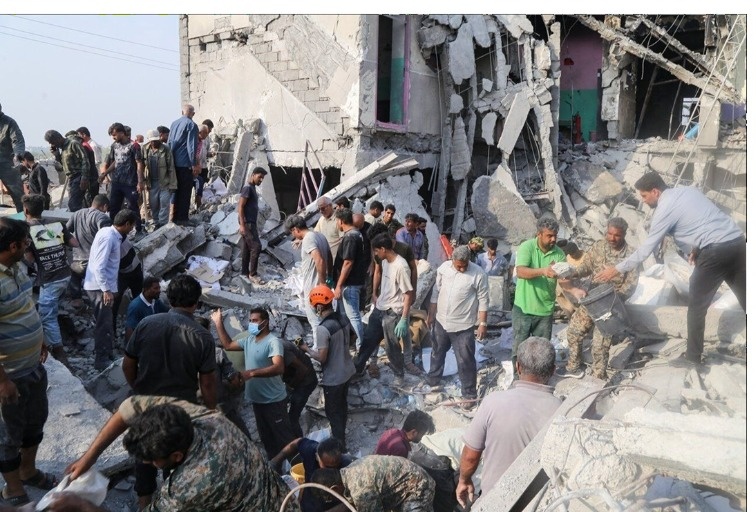
So many people dead. So many economies damaged.
No matter whether you are a farmer in France, or a truck driver in India, the impacts of the Iran war have been inescapable.
But what was it all for?What triggered the Israeli and US attack on Iran, and what did they hope to achieve?
The easy answer – even if it is not the whole story – is that on June 12th 2025 the International Atomic Energy Agency (IAEA) censured Iran for being in breach of its non-proliferation obligations for the first time since 2005.
Tehran’s defiant response, announcing a secret enrichment site,hardly calmed matters. What it did do was to collapse what has been called Israel’s ‘detection-decision window’: that is the time frame between recognising that Iran has started weaponisation of its nuclear programme and being able to respond to stop it with a pre-emptive strike. At this point Israel moved from a policy of containment to a decision to degrade Iran’s program.
From a military perspective, an escalation of conflict was almost inevitable. Israel’s military campaign in Gaza had already degraded Hamas’s leadership and killed more than 70,000 people, whilst in Lebanon Hezbollah’s leadership too had suffered and the civilian population had seen 4,000 people killed.There was no longer a land bridge through Syria after the fall of Assad, and Israel had knocked out most of Iran’s S-300 air defence batteries in their October 24th strike. Add into this military mix the fact that Donald Trump resumed office in the White House with a much more hawkish attitude to Iran, and it is clear that 2025 was a moment which Israel would always seek to put to its maximum advantage.
However clear Israel’s intentions may have been, the United States’ strategic objectives were much more confused. Variously described as the destruction of Iran’s navy, arresting the country’s support for global terror, and preventing Iran from securing the bomb, the multiplicity of goals and the poor communication between White House and Pentagon did nothing to bolster the US’s position.
The swiftly agreed ceasefire of June 2025 came to an end in February 2026. Eight months of failed diplomacy, which solved neither the enrichment nor the proxies problem of Hamas and Hezbollah, did prompt Iran to escalate rather than defuse the conflict. Crucially, it also gave Tehran the time to prepare.
The impact upon international trade and the cost of living has imposed crippling political consequences on the global economy
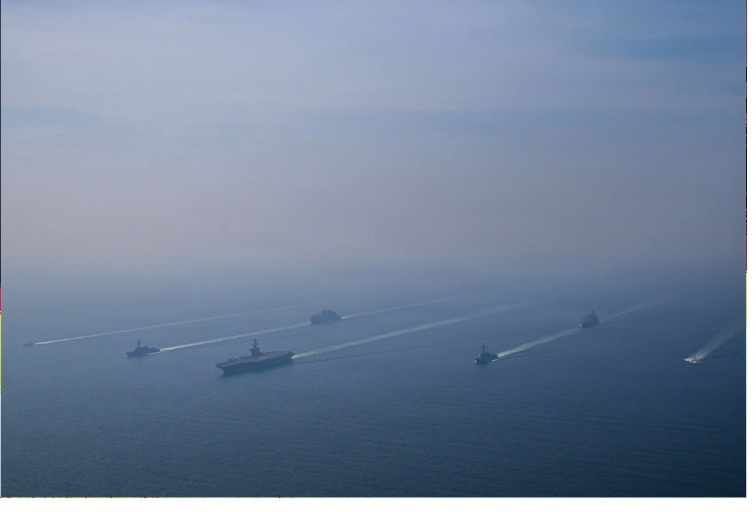
Iran decided to abandon its strategy of calibrated retaliation. Two US carrier strike groups sailing as an ‘armada’ into the region made it clear that the US was using the ceasefire to reboot, and Iran took the decision to impose heavy costs on the US for any future engagement.
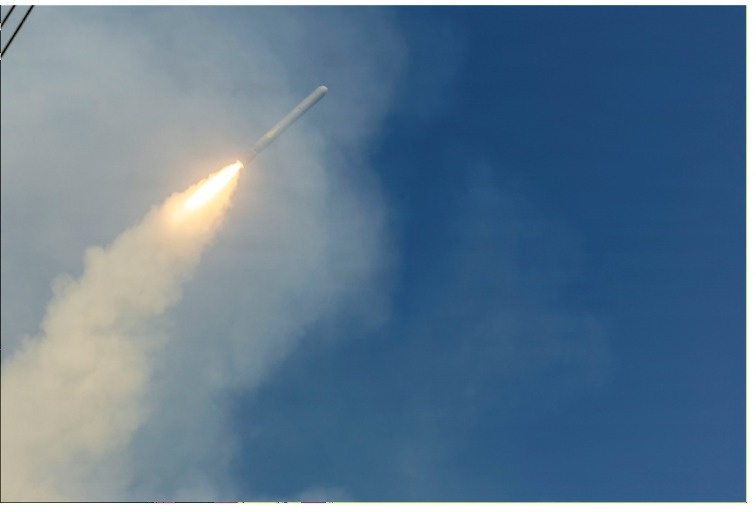
On February 28, the US/Israeli attackmade a surgical strike to kill Ayatollah Khamenei and senior clerics. By day 6 of the conflict the US claimed 2,000+ targets had been hit and Iranian missile launches had been reduced by 86%. President Trump now boasted about a unique opportunity for the Iranian people to overthrow the regime. This showed a failure of US intelligence to appreciate the extent to which the organs of the regime were embedded at all levels of Iranian society.
Worse: the nature of the US attack, Iran not having attacked the USA first, rendered the American action illegal under Articles 2.4 and Article 51of the UN Charter. The European refusal to become involved (or at least as involved as the US wanted) put additional strain on the trans-Atlantic relationship and NATO. And then there was Hormuz!
The United States has poorly understood the situation in the Middle East
The closure of the Strait of Hormuz saw a 90% ship traffic reduction and the worst bottleneck in world trade for 50 years. Fatih Birol, the Executive Director of the International Energy Agency, identified the disruption as worse than the OPEC crisis of 1973/1979. Iran widened the conflictto hit 11 countries which had military cooperation with the Americans, including the Al Udeid Air Base in Qatar. Arab states began to see American bases not as a source of their security, but as a liability that increased their likelihood of attack. Iran struck Gulf ports and airports as part of their strategy to ‘impose enormous costs’ that might deter future attacks.
It is estimated that 20,000 seafarers on board 2,000 vessels have been stranded in the strait since the war restarted in February. The impact upon international trade and the cost of living has imposed crippling political consequences on the global economy and the US has looked impotent or incompetent.
Their own military assessment of the damage they inflicted upon Iran’s nuclear and military reports that only the entrances to the Natanz nuclear facility were damaged; the Uranium Enrichment Plant at Fordow remains intact. The IAEA found no hits on main installations but confirmed entrances struck, so the nuclear program may have been set back by some months; it has not been eliminated. The knowledge and the underground sites remain intact.
Assessed against the US’s stated aims:
Regime change – not achieved.
Nuclear containment – Programme of weaponisation delayed, not destroyed.
Erosion of proxy power – Hezbollah has been weakened in Southern Lebanon, but fighting there is intensifying; Houthis now threatening to close the other key trade chokepoint of Bab-el-Mandeb.
So what are the lessons and implications that a dispassionate observer might draw from all this?
- Ceasefires without a willingness to address the core disputes do not lead to peace. The Qatari backchannel diplomacy between June 2025 and February 2026 had no robust enforcement framework and simply bought both sides time to rearm.
- Air strikes alone are unable to extinguish a nuclear programme but can lead to escalation by bolstering the view that only a nuclear bomb will be a sufficient and successful deterrent against foreign military attacks.
- The United States has poorly understood the situation in the Middle East. The Pentagon had assumed US intervention such as 2025 would lead to massive retaliation and ‘all-out regional war’. In fact the US misread Iranian escalation thresholds and its ability to inflict economic damage on the US and its allies.
- The US assets based in Gulf countries are actually a risk factor rather than a protection, and the neutrality of GCC states did not protect them. This could see a serious regional re-alignment with US influence in the region downgraded.
As this goes to press,President Trump has announced that ‘Project Freedom’ will help navigate stranded vessels through the Strait of Hormuz. Shortly thereafter, Iran announced that a US warship attempting to pass through the strait had been hit by two missiles and forced to turn back – a claim denied by the White House.
What we do know is that Truth is always the first casualty of war. Yet whatever the truth may be, we can rest assured on these facts: brent crude has risen to just over $114 a barrel.and Lloyd’s of London and insurers around the globe will not be reducing their risk premiums for Gulf-bound vessels any time soon.
Barry Strachan Gardiner is a British politician who served as Member of Parliament (MP) for Brent North