
LINE OF CONTENTION
Line of contention
Tanya Vatsa considers recent escalations along the Af-Pak border, and how they reflect historical frontier tensions between the South Asian neighbours
The idea of a border, in classical strategic thought, is meant to represent finality – an agreed line that transforms contested geography into governed space.
Yet, in the case of the Afghanistan–Pakistan frontier, the border remains less a marker of sovereignty and more a site of continuous negotiation, violence and historical dissonance. What emerges is not merely a territorial dispute, but a deeper contradiction: the existence of a boundary that is internationally recognised but locally unsettled.
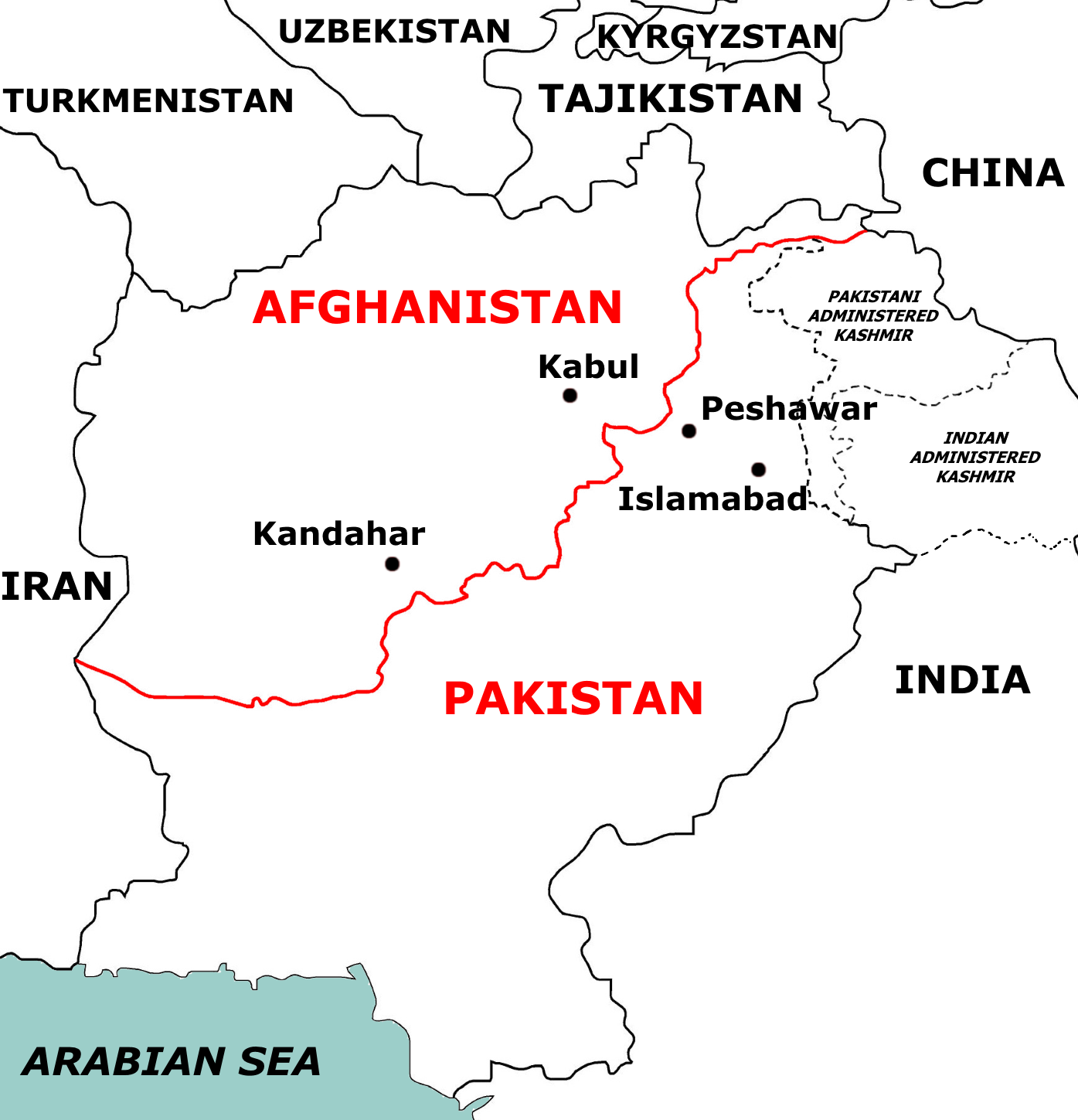
The durability of modern state systems rests on the assumption that borders, once drawn, evolve into accepted realities. However, the contested legacy of the Durand Line challenges this assumption. Established in 1893 between British India and Afghanistan, the line was less a product of mutual consent and more an instrument of imperial expediency. While Pakistan, as the successor state, has treated it as a legitimate international boundary, successive Afghan regimes have refused to formally recognise it. This divergence has ensured that the border remains not just porous in practice, but contested in principle.
The persistence of this ambiguity has had structural consequences. Unlike conventional borders that regulate movement and enforce sovereignty, the Afghanistan–Pakistan frontier cuts through ethnic, tribal and familial networks, particularly among Pashtun communities. The result is a dissonance between state-centric territoriality and community-centric identity. In such a setting, the enforcement of borders often appears as an imposition rather than a function of governance, thereby generating resistance rather than compliance.
Recent escalations along the border reflect this unresolved tension. Skirmishes between Afghan Taliban forces and Pakistani security personnel, particularly at key crossing points such as Torkham and Chaman, are indicative of a deeper strategic unease. Immediate triggers, ranging from disputes over fencing to retaliatory strikes following militant attacks, have amplified hostilities.
Pakistan’s concerns over cross-border militancy, especially the activities of Tehrik-i-Taliban Pakistan (TTP), have led to a more assertive security posture, including airstrikes within Afghan territory. Conversely, the Afghan Taliban’s response has been shaped by both sovereignty concerns and domestic pressures to resist perceived external aggression.
Significant attacks attributed to militant groups operating along this frontier have further complicated the security environment. Pakistan has repeatedly accused Afghan territory of serving as a sanctuary for anti-state actors, while Afghanistan has contested these claims, often framing them within the broader context of Pakistan’s historical involvement in Afghan affairs.
This reciprocal attribution of blame exposes a central paradox: both states view themselves as victims of instability emanating from the other, even as their policies contribute to the very dynamics they seek to counter.
The Afghanistan–Pakistan frontier cuts through ethnic, tribal and familial networks
This cyclical pattern of accusation and retaliation reveals the limitations of conventional deterrence in such contexts. Unlike state-centric conflicts where clear thresholds and signalling mechanisms exist, the Afghanistan–Pakistan dynamic is mediated by non-state actors, informal networks and historical grievances. Deterrence, therefore, becomes diffused, its effectiveness undermined by the absence of a singular adversary and the multiplicity of actors operating across the border.
It is likely that the continued externalisation of security threats risks obscuring the internal dimensions of instability within both states. In Pakistan, the resurgence of militancy in Khyber Pakhtunkhwa and Balochistan reflects deeper issues of governance, political alienation, and uneven development.
Similarly, Afghanistan’s internal security challenges, ranging from factional divisions within the Taliban to the presence of groups such as the Islamic State Khorasan Province (ISKP), highlight the fragility of its domestic order. In both cases, the border serves as a convenient explanatory device, deflecting attention from internal structural deficiencies.
The emphasis on border control as a primary security solution, therefore, appears insufficient. While fencing, surveillance and military deployments may regulate movement, they do little to address the underlying drivers of conflict which include the alienation of border communities, the persistence of parallel governance structures, and the lack of economic integration. In fact, stringent border enforcement, when imposed without local legitimacy, risks exacerbating grievances, thereby reinforcing the very conditions that sustain instability.
Both states view themselves as victims of instability emanating from the other
This raises a broader question regarding the nature of sovereignty in regions marked by historical fluidity. Can sovereignty be effectively asserted through physical demarcation alone, or does it require a deeper alignment between state structures and societal realities? In the absence of such alignment, borders risk becoming zones of friction rather than instruments of order.
The Afghanistan–Pakistan conflict, therefore, is not merely a bilateral issue but a reflection of the challenges inherent in reconciling inherited territorial frameworks with lived social geographies. The trajectory suggests that the costs of this conflict will be borne disproportionately within both states. Escalating violence along the frontier risks further destabilising already fragile regions, diverting resources from governance to security, and deepening cycles of mistrust. More importantly, it risks entrenching a narrative in which external blame is a substitute for internal reform.
The management of internal law and order, the addressing of separatist tendencies, and the integration of marginalised communities become central to sustainable resolution. Without these, the border will continue to function less as a line of control and more as a line of contention.

Tanya Vatsa is currently a Global Intelligence Analyst, and a former Editor at the Journal of Indo-Pacific Affairs, US Dept of Defense. She completed her Master’s in Legal Studies at the University of Edinburgh after obtaining a law degree from Lucknow’s National Law University, India