
A BRIDGE, NOT A BATTERING RAM
A bridge, not a battering ram
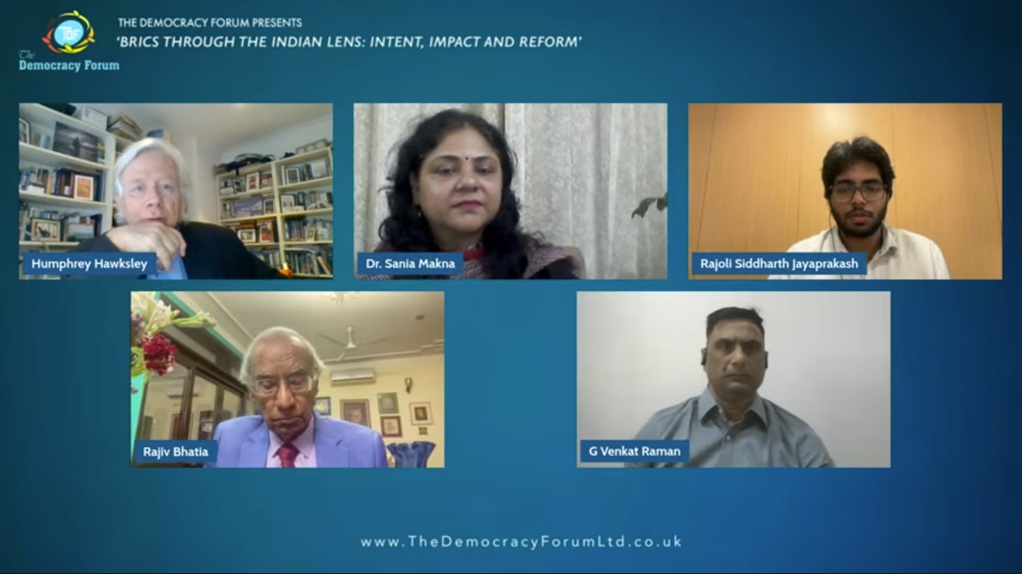
The challenges facing BRICS in its 25th anniversary year as India takes the chair was the focus for a recent Democracy Forum debate, at which the group was viewed through the Indian lens
India’s engagement with BRICS is driven by a pragmatic, multi-alignment strategy focused on reforming global institutions, promoting multipolarity and championing the Global South, aiming to act as a bridge rather than a battering ram in a complex world order. This was among views expressed by experts at a recent Democracy Forum seminar, titled ‘BRICS through the Indian lens: Intent, impact and reform’.
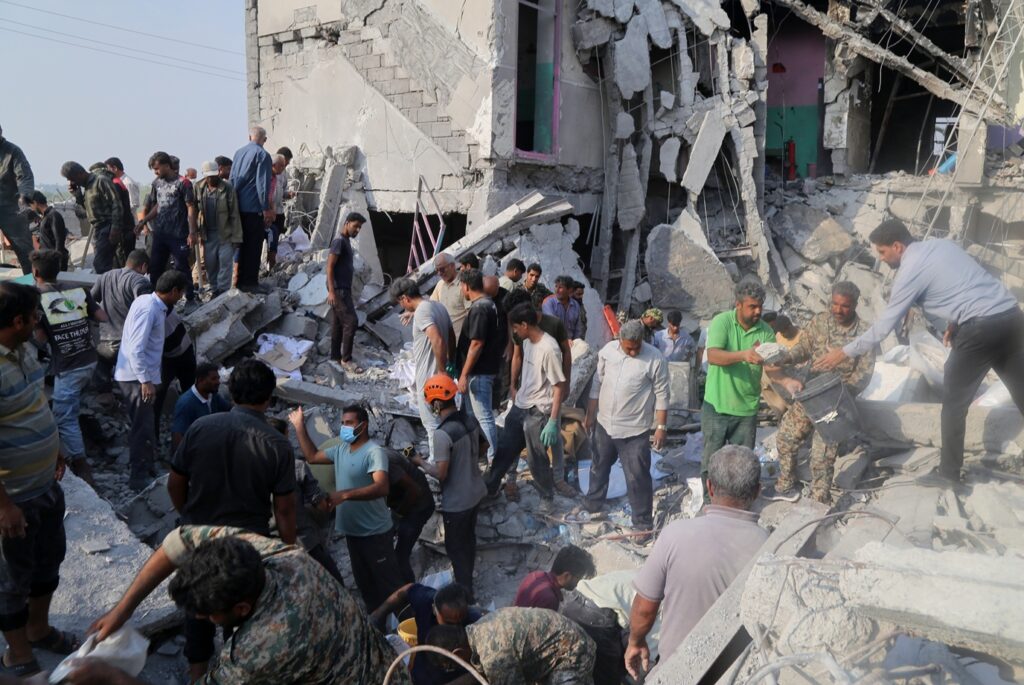
Amidst conflict in the Persian Gulf, TDF president Lord Bruce opened the debate by highlighting the widespread speculation regarding how Iran’s regional neighbours and trading partners might react. Despite Iran’s status as one of the 11 BRICS member states, the alliance has faced significant challenges in presenting a unified front. For instance, four of the five founding members publicly condemned the attack, while India chose not to voice criticism, illustrating the ongoing difficulty BRICS faces in achieving consensus. Lord Bruce referenced Eerishika Pankaj, director at the Organisation for Research on China and Asia, who observed that India’s response has been notably pragmatic, prioritising dialogue and de-escalation over condemnation. Meanwhile, Beijing appears keen to leverage the situation to gauge India’s diplomatic standing within BRICS.
Despite these complexities, India has maintained its leadership as BRICS chair, with Foreign Minister Jaishankar reiterating India’s commitment to building a more inclusive, effective multilateral framework, continuing to champion ‘reformed multilateralism’ and encouraging the bloc to adapt to evolving global realities. As BRICS expands its membership, disparities in political outlooks and strategic interests have grown more pronounced, added Lord Bruce, prompting analysts to question whether BRICS can achieve its vision of shaping a new global order without a shared ideological foundation. He highlighted insights fromChatham House’s Renad Mansour, noting Tehran’s hope that economic repercussions might spur BRICS into action. However, it remains unlikely that any member would back Iran in direct confrontation, and to truly challenge Western dominance, BRICS must evolve beyond its current role as a predominantly economic coalition. India’s stewardship during these turbulent times, Lord Bruce concluded, encapsulates a broader strategic dilemma. India’s principal concern lies in the possibility of an Asia dominated by China, rather than preserving the traditional American leadership. This outlook informs India’s measured and thoughtful approach to global reform, positioning the country as a bridge between East and West, striving for constructive engagement rather than exacerbating divisions.
BRICS has faced significant challenges in presenting a unified front
The world and India needs BRICS, said Ambassador Rajiv Bhatia, a Distinguished Fellow at Gateway House, adding that certainly BRICS needs a peaceful, cooperative world. Regarding India’s intent and approach towards BRICS, the Ambassador encapsulated it using three key points. Firstly, India looks at BRICS in strategic terms, as a guarantee for a multipolar world and a multipolar. Asia. This is what India stands for; it believes unipolarity or bipolarity are not really the bedrocks of democracy. They create huge imbalance, whereas multipolarity creates an atmosphere congenial for everyone to become involved in governance. Second is the ideological or political dimension. BRICS under India’s leadership will try to be non-Western in approach, but definitely not anti-Western. India stands for reforming the international order today but is not working in any way to replace or abandon it. Like many other countries, India is very concerned that the recent setbacks to the rules-based order have caused global instability. The third dimension of India’s approach towards BRICS relates to a special focus on intra-BRICS cooperation. There is consistently a focus on reform of the UN, WHO and other institutions, added the Ambassador, so there should be on BRICS reform as well. And there should also be much focus on the economic side, on how to increase trade investment and supply chain relationships among the BRICS members. Bhatia highlighted, too, the importance of the BRICS’ goal of promoting cultural cooperation and people-to-people connection.
India looks at BRICS in strategic terms, as a guarantee for a multipolar world
However, he also underscored the harsh realities of the world today. BRICS is in distress because three of its members, Saudi Arabia, the UAE and Iran, are engaged in a serious conflict in the Gulf, with Iran on one side, the UAE and Saudi Arabia on the other, in the US-Israel camp. Therefore India, as the present chair of BRICS, has been trying to encourage BRICS to come up with a common joint statement on this issue.
Rajoli Siddharth Jayaprakash, a Junior Fellow at the Observer Research Foundation, spoke of the world’s shifting geo-economic priorities, how there is talk of strengthening geo-economic resilience and stability, and how, under India’s presidency, BRICS has seen a new kind of recalibration taking place. Jayaprakash believed that this year there will be larger attempts to improve multilateralism and strengthen the idea of multipolarity and strategic autonomy. We will also likely see the new development bank and the CRA being much more involved, and Jayaprakash foresaw a greater discourse on sanctions this year, given that sanctions have a long-term implication for economies worldwide.But even with new geo-economic priorities, he added, India does not believe in the creation of a BRICS currency, something Russia ideated in the past up till 2024. Rather, India will likely support the strengthening of trade along national currencies and the strengthening of trade architecture through, for example, the creation of non-Western insurance companies, banks and infrastructure which would strengthen global resilience.
The lack of consensus in BRICS towards the Iran conflict has emboldened critics and sceptics alike, said Dr G. Venkat Raman, Professor at the Indian Institute of Management. India’s BRICS presidency comes at a time when the world was already entering a critical phase in January 2026 because of US tariffs. But the current Iran conflict has added insult to injury. To understand India’s position, added Venkat, one needs to put this year’s theme in perspective: ‘building for resistance, innovation, cooperation and sustainability’. So India’s stand towards BRICS has to be understood via this lens, and the Indian PM’s call for a ‘humanity first’ approach has to be focused. India has made it very clear that it wants to lay down a road map for BRICS which will be in accordance with its strategic autonomy by pursuing multi-alignment strategy, and will use this opportunity to bolster its credentials as leader of the global south. Venkat also referred to ‘three pillars’ of India’s BRICS leadership. One is that India is all for economic pragmatism over ideology; two is the ‘health first’ approach, with India offering its India stack (Aadhaar, UPI and the health stack) as an open-source model for other BRICS countries; and the third pillar is strategic autonomy.
For Dr Sania Makna, Assistant Professor at the Manav Rachna International Institute of Research and Studies, Faridabad, the focus was on India’s position and role in BRICS, how it can strengthen the group as a multilateral organization and, by doing this, how it can reshape the present world order. In a world today riven by conflicts and competition, Makna said India wants a just balanced and democratic order. India’s foreign policy advocates multi-alignment, strategy building, more cooperation and respecting the sovereignty and democracy of other countries, with a belief in more consensus, not force.Makna underscored, too, PM Modi’s people-centric approach, with a desire to avoid conflicts and focus on mutual economic, social and political cooperation and consensus. So India’s vision for BRICS suggests it can be the voice for developing countries in the bloc.
Key takeaways from the debate included the potentially crucial role of BRICSas a coherent force in navigating the unpredictable landscape of global affairs, and India’s pivotal position within BRICS, as both the nation and the wider world benefit from the collaborative spirit and strategic objectives the group fosters.
MJ Akbar is the author of several books, including Doolally Sahib and the Black Zamindar: Racism and Revenge in the British Raj, and Gandhi: A Life in Three Campaigns
To watch the full discussion, tune in to