
MAKING OF THE SECOND REPUBLIC
Making of the Second Republic
In the wake of Bangladesh’s February polls, Y.S. Gill assesses what victory for the BNP will mean for the country and its neighbours, especially Indo-Bangladesh relations
In the wake of Bangladesh’s February polls, YS Gill assesses what victory for the BNP will mean for the country and its neighbours, especially Indo-Bangladesh relations
The recent parliamentary elections, and the accompanying constitutional referendum held on February 12, 2026, represent a historic and structural shift away from the state-mandated secularism that has defined Bangladesh since its liberation from Pakistan in 1971. Bangladesh’s foundations were laid on the precepts of a modern secular democracy, rejecting Pakistan’s concept of an Islamic nation state – the two-nation theory which led to India’s partition and the formation of Pakistan.
While labelling the recent developments as an ‘end’ of pluralism could be too simplistic, the political and constitutional pivot of the country has indeed shifted to a quasi-religious rightist dispensation. Much of the noise and Gen-Z euphoria evaporated during the elections. The decisive shift in Bangladeshi politics and governance was not visible in the results of the polls, but in the outcome of national referendum held together with the parliamentary elections, which will deeply influence the course the country takes in future.
The July Charter
Over 61 per cent of voters approved the ‘July National Charter’, which recasts the Constitution of Bangladesh. By so naming the document, the interim government and the signing parties agreed to ‘constitutionalise’ the spirit of July 2024 that saw massive street protests by the youth.It was declared that the charter was a direct product of the sacrifices made by the ‘July Fighters’.
The charter abolishes the traditional ‘Mujibist’ foundational principles of the state, which explicitly included Secularism, Socialism, and Bengali Nationalism. These have been replaced with the principles of ‘Equality, Human dignity, Social justice, Religious freedom and Harmony’. Although it proclaims the ‘coexistence’ of all communities, the constitutional commitment to secularism as a guiding state ideology has been removed.
The Awami League was banned from participating in the election by the interim government
Big majority for BNP
The Bangladesh Nationalist Party (BNP) – which has traditionally rooted for ‘Bangladeshi’ nationalism that leans heavily on Islamic identity – swept the polls, bagging a two-thirds majority of 209 seats. Together with its broader alliance partners, it has 212 seats in Parliament.
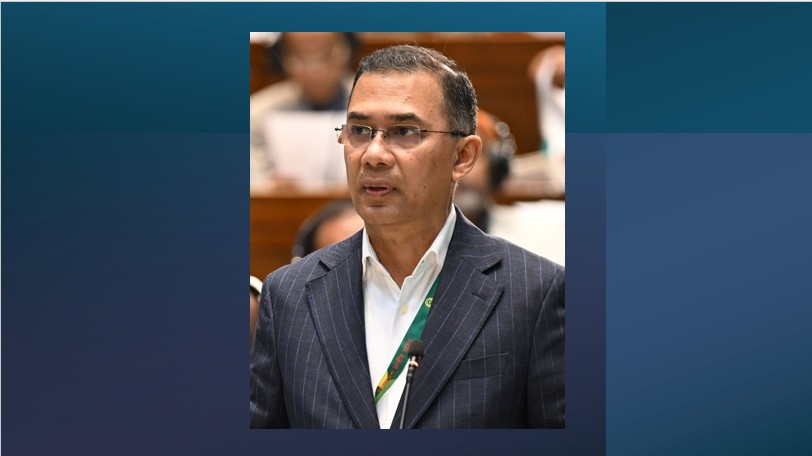
The party is led by led by Tarique Rahman, son of the late Gen. Ziaur Rahman and former Prime Minister Khaleda Zia, Sheikh Hasina’s arch-rival. Khaleda died after a long illness in December last year.
The Awami League, the party associated with the liberation of Bangladesh and its secular-nationalist policies, was banned from participating in the election by the interim government, effectively disenfranchising the country’s traditional secular voting bloc. Capitalising on the political vacuum, the fanatic Islamic party, Jamaat-e-Islami, won the second-highest number of seats, 68, making it the main oppositional in Parliament.
Representing the student-led ‘July Uprising’movement,the National Citizen Party (NCP) won only six seats. Its controversial alliance with Jamaat-e-Islami seems to have alienated progressive youth, secular voters and religious minorities, who had broadly supported the student protests. This points to the strong undercurrent of progressive politics among a significant segment of the population.
Neighbouring countries will now have to navigate a radically altered political environment in Dhaka
Geopolitical reset
The simultaneous adoption of the July Charter and the BNP’s super majority reshapes the broader South Asian diplomatic landscape. Neighbouring countries – particularly India, which had heavily invested in the previous secular Awami League government – will now have to navigate a radically altered political environment in Dhaka, one that is currently tempered by strong anti-New Delhi sentiments with a willingness to redefine its international relations. Bangladesh is entering a new era of rising conservative nationalism.
While Gen Z miserably failed in the electoral battle, they nevertheless succeeded in changing the rules of the game. The July Charter, which echoes the demands raised by the student leaders, provides for sweeping structural reforms, designed to prevent future ‘dictatorships’, including strict term limits and robust anti-corruption measures.
Following Prime Minister Sheikh Hasina’s ouster, key student leaders such as Nahid Islam and Asif Mahmud were directly inducted into Muhammad Yunus’s interim government as official advisors, giving the youth unprecedented power in the transitional state.
The July Charter mandates a transition to a bicameral legislature (adding a 100-member Upper House) and imposes a two-term limit for the Prime Minister. India has previously relied on a ‘single-window’ diplomacy through the Prime Minister’s Office (PMO) in Dhaka. A more empowered Parliament and a Senate with proportional representation mean that future bilateral treaties, especially sensitive ones like water-sharing or transit, will face in-depth domestic scrutiny and may require broader political consensus for their ratification.
At the core of the Charter is the shift in official definition of nationality from ‘Bengali’ to ‘Bangladeshi’, signalling a departure from the ‘Mujibist’ secular-nationalist framework that was the ideological bedrock of India-Awami League relations. This amendment is aimed to move Bangladesh away from its shared linguistic and cultural heritage with West Bengal – the cultural bridge that was often central to Indian diplomacy.
International condemnation of these abuses has been muted
Security treaties: The coming recalibration
The 2026 mandate puts several high-stakes security and logistics agreements on the table for ‘re-negotiation’ or ‘review’, as signalled by the new government in Dhaka. Under the 2013 Extradition Treaty, India and Bangladesh maintained an exceptional level of security cooperation, which helped India to curb insurgency in North-east India. If this cooperation with Bangladesh weakens,there is a likelihood of a resurgence of anti-India networks in districts like Satkhira and Rangpur bordering India, where Jamaat-e-Islami has consolidated its influence in the 2026 elections. India will have to pragmatically move from a ‘trusted ally’ model to a ‘professional interest’ model.
Intelligence sharing will most likely become more transactional, requiring India to offer clearer incentives (such as energy security or trade concessions) in exchange for continued ‘zero-tolerance’ towards anti-India insurgents who find safe enclaves in the bordering districts of Bangladesh.
The use of Chittagong (Chattogram) and Mongla ports for Indian goods has been an important pillar of India’s Act East policy. The BNP has historically been more sceptical of ‘corridor’ rights, often framing these as a compromise of sovereignty. While the new government is unlikely to shut these down due to economic necessity, India should be prepared for a push for higher transit fees and a demand for reciprocal access for Bangladeshi goods to Nepal and Bhutan via Indian territory.

The Second Republic
The early weeks of the Rahman administration, however, suggest a ‘pragmatic reset’ rather than a total rupture of Indo-Bangladesh relations. Indian Prime Minister Narendra Modi’s congratulatory call to Tarique Rahman and the presence of External Affairs Minister S. Jaishankar at the funeral of Khaleda Zia (a major pre-election signal) indicate that New Delhi has accepted the new reality.
On March 10, 2026, India supplied a critical consignment of high-speed diesel to Dhaka to help the country manage its energy crisis. This ‘energy diplomacy’ could prove to be a more resilient bond than historical sentiment. The Ganga Waters Treaty, turning 30 this December, is the next major test, with Bangladesh’s Foreign Minister, Khalilur Rahman, expected to be in Delhi in April to initiate these high-stakes talks.
The July Charter forces India to engage with a system rather than a person. By institutionalising opposition power and transparency, the Charter might make Bangladesh a more ‘difficult’ partner in the short term, but a more stable and predictable one in the long run – provided India can pivot its strategy to match this new, multi-polar Bangladeshi polity. Foreign ministry mandarins in New Delhi will have to be realistic and come to terms with the ‘Second Republic’ of Bangladesh.
YS Gill is a political analyst